Polestar 4 review: Can the Polestar 4 actually tow? Maximum Polestar 4 towing capacity - need a towbar?
The Polestar 4 is an unusual car, and that is both its greatest strength and, in some respects, its greatest weakness. It sits somewhere between a large electric hatchback, a coupé and an SUV, with a low roofline, long wheelbase and remarkably spacious cabin. Rather than following the increasingly familiar electric-SUV formula, Polestar has tried to create something more distinctive, and the result is a car that feels considerably more interesting than many of its direct competitors.
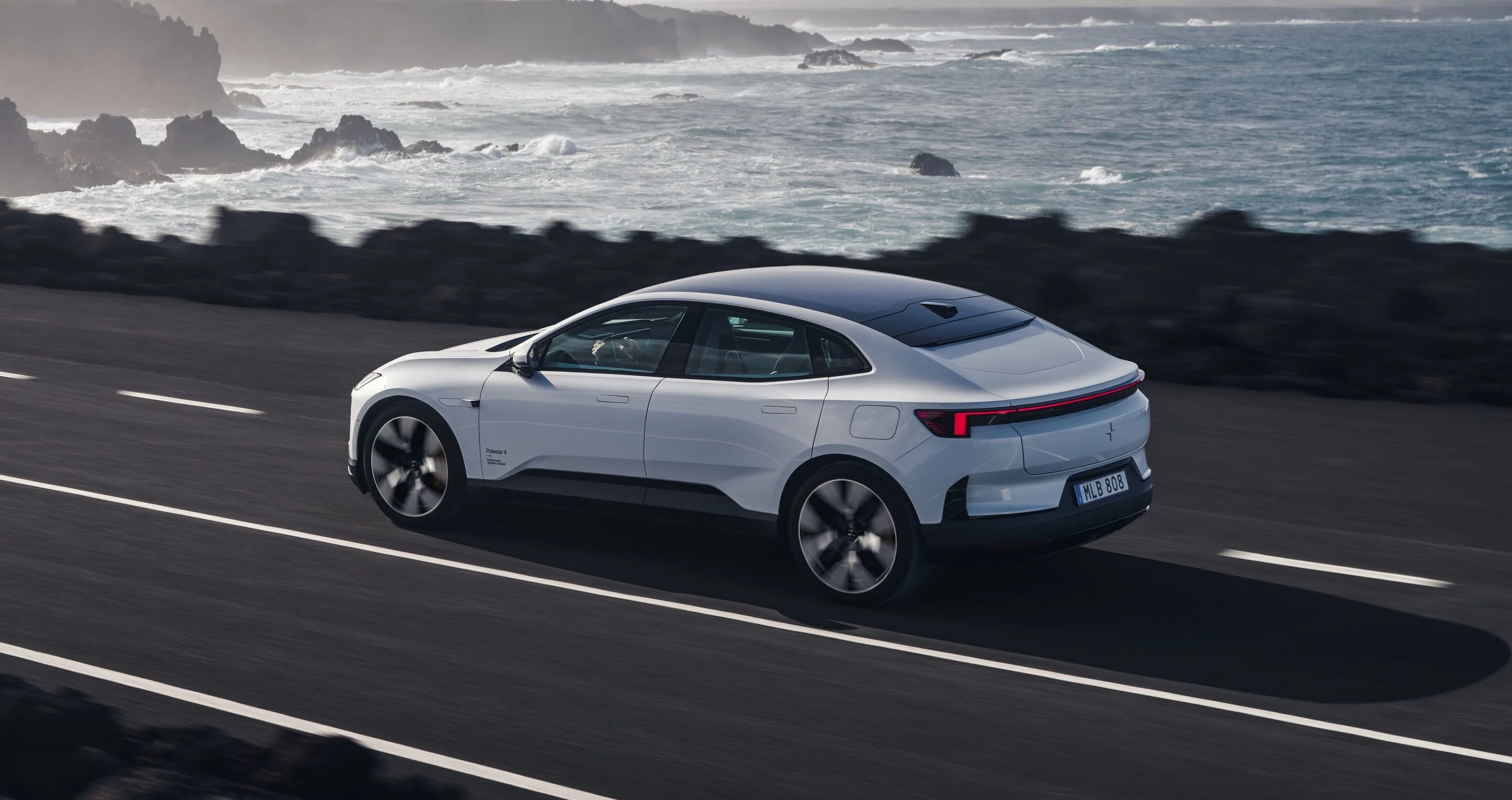
The design is undoubtedly one of the Polestar 4's strongest features. It has the clean, minimalist appearance associated with the brand, but its proportions give it more presence than the smaller Polestar 2. The front is relatively restrained, while the rear is where the design becomes particularly distinctive. There is no conventional rear window at all. Instead, the Polestar 4 uses a roof-mounted rear camera and displays the image on a digital rear-view mirror inside the cabin. This allows the designers to create a long, uninterrupted roofline while also giving rear passengers more space.
The missing rear window takes some getting used to. A conventional mirror provides natural depth perception because the driver is looking into the distance, whereas the Polestar's screen presents a camera image that is effectively closer to the driver. The system provides a wide and generally clear view behind the car, and passengers or luggage do not obstruct it, but manoeuvring can initially feel less intuitive. It is one of those features that will be perfectly acceptable to some drivers and genuinely irritating to others, making a proper test drive particularly important.
Inside, the Polestar 4 is much more convincing as a luxury car than its relatively restrained exterior might suggest. The cabin has the minimalist Scandinavian character expected from Polestar, with high-quality materials, a large central display and comparatively few physical controls. The overall impression is modern rather than traditionally luxurious. It does not attempt to imitate an Audi or BMW interior with numerous buttons, switches and layers of decorative trim. Instead, the cabin is clean, quiet and deliberately uncluttered.
The most impressive aspect of the interior is the amount of space available in the rear. The nearly three-metre wheelbase provides generous legroom, and the absence of a conventional rear window allows the roof structure to extend further back without creating the cramped feeling that can accompany many coupé-style vehicles. Adults can sit comfortably in the rear, and the panoramic roof contributes to the sense of openness. This makes the Polestar 4 considerably more practical for passengers than its sleek profile initially suggests.
The front seats are also well suited to long-distance driving. The driving position is comfortable and the car has the quiet, relaxed character expected of a premium electric vehicle. Road and wind noise are generally well suppressed, although the choice of large wheels can have a noticeable effect on both ride quality and efficiency. The smaller standard wheels make more sense for buyers prioritising comfort and range, while the larger Performance-oriented wheels give the car a more aggressive appearance at the expense of some efficiency and compliance.
On the road, the Polestar 4 is a fast and capable car rather than a true sports car. The Dual Motor version produces 544 horsepower and 686 Nm of torque, allowing it to accelerate from 0 to 100 km/h in just 3.8 seconds. The acceleration is effortless, as expected from a powerful electric drivetrain, and the all-wheel-drive system provides excellent traction. Despite weighing well over two tonnes, the car never feels particularly slow or cumbersome when accelerating.
The character is more grand-tourer than sports sedan. Steering is accurate and the body is reasonably well controlled, but the Polestar 4 does not have the delicacy or communication of a Porsche Macan Electric. Its strengths lie in effortless performance and high-speed stability rather than making every corner an event. The standard suspension is generally the better choice for everyday use, particularly on imperfect European roads, while the adaptive suspension available with higher-specification versions provides greater control when driving more enthusiastically.
The single-motor version is arguably the more rational choice for drivers who do not require all-wheel drive or maximum towing capacity. It produces 272 horsepower and sends its power to the rear wheels, which is still enough for brisk everyday performance. It is also lighter and more efficient than the Dual Motor version and has a slightly longer official range. For normal driving, there is little reason to regard the single-motor car as underpowered.
Range is one of the Polestar 4's significant advantages. The car uses a 100-kWh battery, with approximately 94 kWh usable, and official WLTP range reaches around 620 kilometres in the most efficient rear-wheel-drive configuration. The Dual Motor version is rated at approximately 590 kilometres. Real-world results are naturally lower. A rear-wheel-drive Polestar 4 can achieve roughly 450–550 kilometres in favourable mixed driving, while sustained motorway speeds reduce that figure considerably. Cold weather can have a particularly noticeable effect, and independent winter testing has demonstrated that consumption can rise substantially in low temperatures.
The car's large battery therefore makes the Polestar 4 a very competent long-distance EV, but it is important not to confuse its impressive WLTP figure with motorway range. At 120–130 km/h, particularly in winter, a driver should expect something closer to the mid-300s or low-400s depending on conditions. That is still respectable for a large electric car, but it is not exceptional by the standards of the latest long-range EVs.
Charging is good rather than class-leading. The Polestar 4 can accept up to 200 kW on a suitable DC fast charger, and Polestar quotes approximately 30 minutes for a 10–80 per cent charge. Independent testing has broadly supported that figure, with the car maintaining a useful charging rate through much of the session. For long journeys this is perfectly workable, but the 400-volt architecture means that the Polestar 4 cannot compete with the latest 800-volt cars from Porsche and Audi, which can make better use of very high-power charging infrastructure.
The charging experience has nevertheless benefited from software updates. Polestar has continued to refine battery preconditioning, navigation and charging-related functions through over-the-air updates. This is an important part of the ownership experience because the software is responsible for a substantial proportion of the car's functionality.
The Google-based infotainment system is one of the better systems in the segment. Google Maps is deeply integrated into the car, Google Assistant is available for voice commands and Google Play provides access to compatible applications. Apple CarPlay is also supported. The large central display is responsive and visually sharp, although the increasing reliance on the touchscreen means that some functions require navigating through menus that would be quicker with traditional physical controls.
Practicality is reasonable rather than exceptional. The rear seats are unusually spacious, but the boot does not quite match the amount of passenger space. The Polestar 4 offers around 526 litres with the rear seats in place and approximately 1,536 litres with them folded. There is also a small front storage compartment. The sloping rear body means that particularly tall objects are less convenient to carry than they would be in a conventional SUV, despite the car's considerable exterior dimensions.
Towing with the Polestar 4:
Towing is an area where the Polestar 4 becomes particularly interesting. The rear-wheel-drive version can tow a braked trailer weighing up to 1,500 kg, while the Dual Motor version increases the maximum braked trailer weight to 2,000 kg. The maximum unbraked trailer weight is 750 kg and the maximum towball load is 100 kg. These figures make the Dual Motor Polestar 4 a genuinely capable tow car rather than an EV that merely happens to have a towbar option.
For caravan users, however, the 2,000-kg rating needs to be considered alongside the realities of electric towing. A heavy caravan, particularly one with a relatively large frontal area, can dramatically increase energy consumption. The Polestar 4's normal motorway range can therefore be reduced substantially when towing. A 1,500-kg caravan is considerably more manageable for long-distance journeys than a trailer approaching the full 2,000-kg limit. The Dual Motor version also makes the most sense for towing because its additional power and all-wheel drive provide greater confidence when accelerating, climbing gradients and dealing with poor traction.
The best towbar to fit, is an Polestar 4 Euro Invisible model, as it will keep the sleep lines of the Polestar intact. It hides behind the bumper and is invisible when not in use.
Safety is strong, with the Polestar 4 receiving five stars from Euro NCAP. Its extensive camera and sensor systems provide the expected collection of modern driver-assistance functions, while the car's structure and restraint systems performed well in independent testing. As with any modern vehicle, however, the assistance technology should be regarded as a safety aid rather than a substitute for an attentive driver.
The Polestar 4's ownership proposition is also helped by its relatively simple electric drivetrain. There is no conventional engine, gearbox or exhaust system to maintain, and scheduled servicing requirements are relatively modest. The larger question over the long term is less likely to concern the electric motors or battery than the increasingly sophisticated electronic systems, cameras, displays and software on which the car depends. Polestar provides an eight-year or 160,000-kilometre battery warranty, with battery replacement or repair covered if capacity falls below the specified threshold during that period.
The comparison with the Porsche Macan Electric, Audi Q6 e-tron and BMW iX is revealing. The Porsche is the more accomplished driver's car, while the Audi has the benefit of an 800-volt charging system and a more conventional SUV layout. The BMW offers greater interior space and can tow up to 2,500 kg in appropriate configurations. The Polestar 4 counters with distinctive design, excellent rear passenger space, strong performance and a very competitive 2,000-kg towing capacity in Dual Motor form.
Ultimately, the Polestar 4 succeeds because it does not try to be everything to everyone. It is not the most practical large electric SUV, it does not have the fastest charging system and it is not the sharpest car to drive. Instead, it offers a compelling combination of long-distance ability, performance, comfort, technology and individuality. The rear-seat space is particularly impressive, and the Dual Motor's 2,000-kg towing capacity makes it considerably more versatile than its coupé-like shape suggests.
For buyers who want maximum range and do not need four-wheel drive or heavy towing capability, the rear-wheel-drive version makes the most sense. For anyone intending to tow a substantial caravan or trailer, the Dual Motor is the more appropriate choice, with its 2,000-kg limit and additional traction and performance. In either case, the Polestar 4 is a convincing alternative to the increasingly crowded field of premium electric SUVs, provided that the unusual camera-based rear-view system is acceptable.
To increase its functionality, be sure to order one of our Polestar 4 towbars today.


 The tow bar becomes completely invisible - the lines of your car are not spoiled in the slightest.

 Select your Vehicle


