BMW iX3 NA5: A Comprehensive Review - Towing with the BMW iX3 NA5 – need a towbar?
The BMW iX3 NA5 represents a fundamental change in BMW’s approach to electric mobility. Developed on the Neue Klasse architecture, the new electric SUV introduces an entirely new design language, a next-generation electric powertrain, a redesigned digital cockpit and a more integrated electronic control system. Rather than serving as a simple successor to the previous iX3, it establishes the technical and stylistic direction for a new generation of BMW electric vehicles.
The NA5 combines the traditional expectations of a premium BMW SUV with the advantages of a purpose-built electric platform. Its defining characteristics are long-distance range, rapid charging, strong acceleration and an increasingly software-oriented driving experience.
Exterior design and proportions
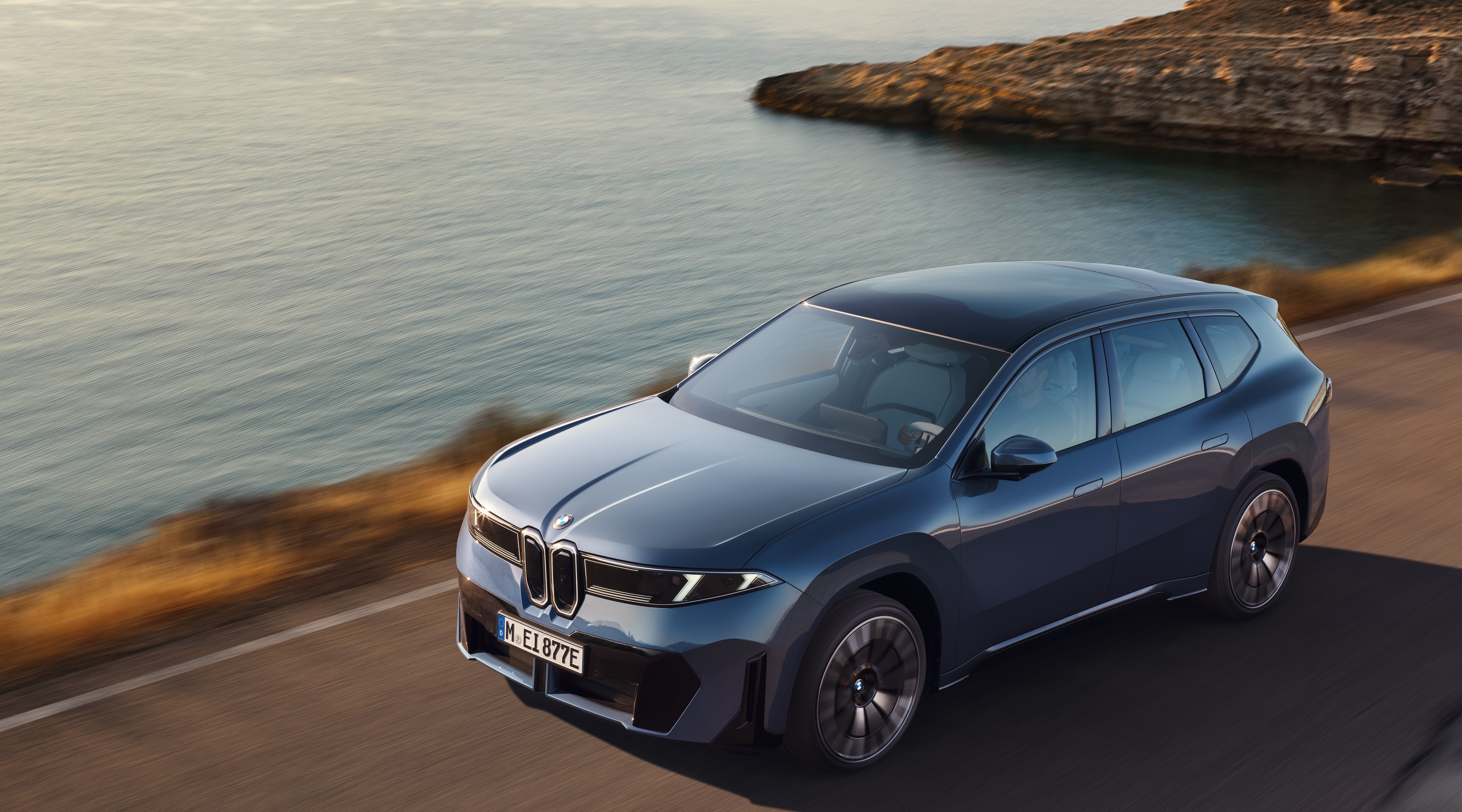
The exterior design marks a deliberate departure from the increasingly complex styling associated with some recent BMW models. The front end adopts a narrower interpretation of the traditional kidney grille, integrated with the lighting elements to create a more cohesive visual identity. The result is a cleaner and more restrained appearance that places greater emphasis on proportion, surface treatment and aerodynamic efficiency.
The side profile retains the recognisable silhouette of a premium mid-size SUV, while the carefully sculpted bodywork and relatively smooth surfaces reflect the priorities of an electric vehicle. The design avoids making the car appear excessively futuristic, preserving a degree of visual familiarity for existing BMW customers.
At the rear, the lighting arrangement and simplified body surfaces reinforce the Neue Klasse identity. The overall design is more architectural than ornamental, with fewer competing visual elements.
The styling may not appeal equally to all buyers. Traditional BMW enthusiasts who favour a more aggressive front end may find the new approach comparatively understated. Nevertheless, the NA5 establishes a distinct identity without relying on exaggerated proportions or excessive decorative detailing.
Overall, the exterior is one of the more successful aspects of the vehicle. It communicates technological advancement while retaining the practical proportions expected of a family-oriented SUV.
Interior design and perceived quality
The cabin introduces one of the most significant changes in the NA5. BMW has replaced the conventional instrument-panel arrangement with a more integrated digital environment centred on Panoramic Vision, the central touchscreen and an optional three-dimensional head-up display.
Panoramic Vision projects information across the lower portion of the windscreen, allowing essential driving information to remain closer to the driver's natural field of view. The central display manages navigation, infotainment, vehicle settings and other functions, creating a dashboard with fewer conventional controls.
This approach gives the cabin a contemporary and uncluttered appearance. It also allows BMW to integrate navigation, charging information and vehicle functions more closely than in previous generations.
However, the reduction in physical controls introduces a potential disadvantage. Functions that previously required a simple button press may now involve touchscreen menus or steering-wheel inputs. The effectiveness of the design therefore depends on the clarity of the interface, the responsiveness of the software and the ease with which frequently used functions can be accessed while driving.
Material quality is another important consideration. The cabin presents a modern and technologically advanced appearance, but perceived luxury depends on the tactile quality of the surfaces, the consistency of the switchgear and the precision of the interior assembly. Independent assessments have identified some shortcomings in material execution relative to the vehicle's premium positioning.
The steering wheel and its integrated controls also depart from more familiar BMW designs. Their unconventional layout reinforces the technological character of the cabin, although individual preferences will determine whether the arrangement feels intuitive.
The interior is therefore ambitious rather than universally successful. Its digital architecture represents a substantial advance, but long-term satisfaction will depend on everyday usability and the quality of the materials surrounding it.
Electric powertrain and performance
The launch specification, the iX3 50 xDrive, uses a dual-motor all-wheel-drive configuration producing approximately 345 kW, equivalent to 469 PS, and 645 Nm of torque. BMW quotes acceleration from 0 to 100 km/h in 4.9 seconds, with a maximum speed of 210 km/h.
These figures place the vehicle firmly within the performance-oriented premium SUV category. The immediate torque delivery characteristic of electric motors provides strong acceleration from low speeds, while the dual-motor configuration supports traction and stability across a variety of road conditions.
The powertrain is designed to deliver performance without requiring the driver to select an especially aggressive driving mode. Acceleration is available immediately, making motorway merging, overtaking and rapid changes in traffic speed straightforward.
A more significant development lies in the integration of the powertrain with the vehicle's electronic control systems. BMW's Heart of Joy system coordinates important driving functions, including acceleration, braking and aspects of vehicle dynamics. The intention is to improve the consistency and precision of the vehicle's responses rather than concentrating exclusively on maximum power.
The NA5 also benefits from the structural advantages of a dedicated electric platform. Its battery is positioned low in the vehicle, helping to lower the centre of gravity and support stable handling.
Nevertheless, the vehicle remains a relatively heavy SUV, weighing approximately 2.36 tonnes. Its handling characteristics therefore depend heavily on suspension calibration, tyre selection and electronic control. The car may feel composed and responsive, but its weight cannot be eliminated entirely through software.
The absence of adaptive-damper options in the assessed configuration is also relevant for buyers who prioritise ride comfort or wish to adjust the suspension characteristics to suit different roads.
Overall, the powertrain is one of the NA5's strongest attributes. Its performance is substantial, but the greater achievement is the combination of acceleration, traction and potentially sophisticated vehicle control in a practical family SUV.
Ride comfort and driving dynamics
BMW has traditionally placed considerable emphasis on driver engagement, and the NA5 attempts to preserve this characteristic within a fully electric vehicle.
The low-mounted battery and integrated control architecture provide a strong foundation for stable cornering and predictable responses. Steering inputs, acceleration and regenerative braking are intended to work together rather than operate as separate systems.
The vehicle's weight nevertheless creates a challenge for suspension tuning. A heavy SUV must balance body control with the ability to absorb sharp impacts and uneven surfaces. A firm setup may improve composure during rapid direction changes but can become less comfortable over broken urban roads.
Wheel selection is particularly important. Larger wheels can contribute to a more assertive appearance and more immediate steering responses, but they generally leave less tyre sidewall available to absorb road imperfections. Smaller wheels may therefore offer a more suitable balance for drivers who frequently encounter potholes, expansion joints and uneven European road surfaces.
The regenerative braking system is another important part of the driving experience. A well-calibrated system should recover energy smoothly while maintaining predictable deceleration. The transition between regenerative braking and the conventional friction brakes is particularly important during low-speed driving and emergency stops.
The NA5's integrated electronic architecture provides the potential for a refined and consistent driving experience. Its ultimate appeal, however, depends on whether the suspension, steering and braking calibration work together effectively under real-world conditions.
Range and energy efficiency
Range is one of the principal strengths of the new iX3. The launch model has a usable battery capacity of approximately 108.7 kWh, with BMW quoting a maximum WLTP range of around 806 km for selected configurations.
Independent testing provides a more useful indication of how the vehicle performs outside the laboratory. In its October 2026 assessment, ADAC recorded a range of approximately 669 km in its test cycle and average consumption of 18.3 kWh/100 km, including charging losses.
These figures indicate that the NA5 is not dependent solely on an exceptionally large battery to achieve competitive range. Its aerodynamic efficiency and electric powertrain also contribute to the result.
Actual range varies considerably with driving conditions. Urban driving and moderate speeds can produce relatively favourable consumption, while sustained motorway travel increases aerodynamic resistance. Cold temperatures, precipitation, headwinds, winter tyres and passenger or luggage loads can further reduce the distance available between charging stops.
For everyday planning, the official WLTP figure should therefore be treated as a comparative benchmark rather than a universal expectation. Motorway journeys at approximately 130 km/h may produce substantially lower range than mixed driving in mild weather.
The distinction becomes particularly important in winter. Battery heating, cabin heating and less favourable driving conditions can increase energy consumption. Drivers undertaking long journeys should plan around conservative motorway estimates rather than assuming that the vehicle will achieve its maximum certified range.
The large battery nevertheless provides substantial flexibility. Even when real-world consumption increases, the NA5 retains enough capacity to make long-distance travel practical with appropriately planned charging stops.
Charging performance
The NA5's 800-volt electrical architecture is one of its most important technical advantages. BMW specifies peak DC charging power of up to 400 kW and a charging time of approximately 21 minutes for a 10–80 per cent charge under suitable conditions.
These figures place the vehicle among the more capable electric SUVs in terms of charging performance. However, maximum charging power alone does not determine how quickly a vehicle can complete a charging stop. The charging curve, battery temperature, state of charge and capabilities of the charging station are equally important.
ADAC's testing provides a useful real-world reference. On a charger limited to 300 kW, the vehicle reached approximately 296 kW and completed a 10–80 per cent charge in around 25 minutes.
This result demonstrates that the NA5 can make effective use of high-power charging infrastructure without requiring a station capable of delivering the full advertised 400 kW.
The car's navigation and battery-conditioning systems also influence the experience. Preparing the battery for a rapid-charging stop can help it accept energy more quickly, particularly in colder conditions. The quality of route planning and charging-station selection therefore matters almost as much as the theoretical peak power.
For European travel, the NA5's charging capability is particularly attractive. It can reduce the time spent stationary during long journeys, provided that suitable high-power chargers are available along the route.
Home charging remains the most convenient arrangement for many owners. The standard 11 kW AC charger can replenish the battery overnight in typical circumstances, while an optional 22 kW AC configuration can reduce charging time where the electrical installation supports it.
The vehicle also supports bidirectional charging functions with compatible equipment and market-specific provisions. Their practical usefulness depends on local availability, installation requirements and the precise functions enabled on the vehicle.
Overall, charging performance is a defining strength of the NA5. The combination of a large battery and high charging capability makes it particularly well suited to drivers who regularly undertake long journeys.
Practicality and passenger accommodation
The NA5 retains the proportions of a conventional family SUV while benefiting from its dedicated electric platform. Its wheelbase of approximately 2,897 mm provides a useful foundation for passenger accommodation, and the cabin is designed to serve everyday family requirements as well as longer journeys.
BMW quotes a luggage capacity of 520 litres, expanding to approximately 1,750 litres with the rear seats folded. A separate front storage compartment provides additional space for smaller items and charging cables. Need more space, be sure to increase the iX3s practicality by fitting a towber.
Independent measurements can differ from manufacturer figures because of differences in measurement methods and loading boundaries. As a result, the headline boot capacity should not be interpreted as a direct guarantee of usable luggage space.
The shape of the luggage compartment, the height of the loading floor and the ease with which bulky objects can be accommodated are equally important. Families carrying prams, sports equipment or holiday luggage should assess these factors directly.
The vehicle's five-seat configuration and all-wheel-drive system make it suitable for a broad range of family requirements. A braked towing capacity of up to 2,000 kg also increases its versatility, although towing can reduce range substantially.
There are some practical compromises. Independent assessments have noted that the rear bench is not sliding and that certain luggage-compartment details could feel more substantial in a vehicle at this price. These considerations do not undermine the car's overall practicality, but they illustrate the difference between impressive technical specifications and everyday convenience.
The NA5 is consequently a capable family SUV, although the usefulness of its interior space should be evaluated in person rather than inferred exclusively from published capacity figures.
Towing with the BMW iX3 NA5: A Comprehensive Guide
The new BMW iX3 NA5 offers substantial towing capability for a fully electric premium SUV. With a published maximum braked trailer weight of up to 2,000 kg, the iX3 50 xDrive is suitable for towing a range of trailers, including touring caravans, boat trailers and general-purpose utility trailers, provided that the vehicle and trailer remain within their approved weight limits.
Its dual-motor all-wheel-drive powertrain, delivering 345 kW (469 PS) and 645 Nm of torque, provides a strong foundation for towing. However, the most important considerations are not simply the vehicle's power or maximum towing capacity. Real-world range, charging logistics, nose-weight limits and the fully loaded vehicle weight determine how practical the iX3 will be for regular towing.
Official towing capacity and weight limits
The published European specifications for the BMW iX3 50 xDrive provide the following reference figures. The exact limits must be verified against the vehicle's certificate of conformity and registration documents.
|
Specification
|
BMW iX3 NA5
|
|
Maximum braked trailer weight
|
2,000 kg
|
|
Maximum unbraked trailer weight
|
750 kg
|
|
Maximum towball nose weight
|
80 kg
|
|
Published kerb weight
|
Approximately 2,360 kg
|
|
Maximum permitted vehicle mass
|
Approximately 2,825 kg
|
|
Usable battery capacity
|
Approximately 108.7 kWh
|
|
Power
|
345 kW (469 PS)
|
|
Torque
|
645 Nm
|
|
Drivetrain
|
Dual-motor all-wheel drive
|
These figures describe the vehicle's published capabilities, rather than a guarantee that every trailer weighing up to 2,000 kg will be suitable in every loading configuration.
The maximum braked trailer weight represents the upper limit for an appropriately braked trailer. The unbraked limit applies to trailers without their own braking system.
The 80 kg nose-weight limit is particularly important for caravan owners. It represents the maximum permitted downward load imposed on the towball, subject to the limits of the towbar and trailer as well. A caravan with a nose weight exceeding this limit would require its loading to be adjusted or a different towing arrangement to be considered.
Towing performance and driving characteristics
The iX3's electric powertrain should offer several advantages when towing. Electric motors deliver torque almost immediately, allowing the vehicle to move away smoothly without the need for conventional gear changes or a high engine speed.
This is particularly useful when pulling a heavy caravan away from traffic lights, climbing a steep access road or manoeuvring a trailer at low speeds. The dual-motor all-wheel-drive system can also distribute power between the axles to help maintain traction on wet or slippery surfaces.
The vehicle's substantial power output provides ample acceleration potential, although towing a heavy trailer naturally reduces acceleration and increases the distance required to complete overtaking manoeuvres. Safe towing therefore depends on maintaining appropriate speeds and allowing sufficient room for braking.
Stability is equally important. The iX3 is a relatively heavy SUV, which can provide a useful foundation for towing, but the actual stability of the combination depends on the relationship between the vehicle and trailer weights, the trailer's loading, tyre pressures and the distribution of weight around the trailer axles.
A properly matched caravan should remain stable at legal towing speeds without requiring frequent steering corrections. Excessive nose weight, insufficient nose weight or poorly distributed luggage can compromise stability even when the overall trailer mass remains below the maximum permitted figure.
Real-world range when towing
Range is likely to be the principal compromise when using the iX3 for towing. Although the vehicle has a large usable battery of approximately 108.7 kWh, a caravan or tall trailer increases aerodynamic drag considerably. Rolling resistance, gradients, wind and additional weight further increase energy consumption.
There is not yet sufficient independently verified towing-test evidence to establish a definitive real-world range for the NA5 across different caravan sizes. The following figures are illustrative planning estimates rather than measured test results.
|
Towing conditions
|
Illustrative consumption
|
Theoretical full-battery range
|
|
Light, relatively aerodynamic trailer
|
23–28 kWh/100 km
|
388–473 km
|
|
Typical touring caravan
|
30–38 kWh/100 km
|
286–362 km
|
|
Large or tall caravan at motorway speeds
|
38–45 kWh/100 km
|
241–286 km
|
These calculations divide the usable battery capacity by the assumed energy consumption. They represent the distance obtainable by using the entire usable battery and should not be interpreted as practical distances between charging stops.
In normal touring, the driver would generally retain a battery reserve and recharge before reaching a very low state of charge. The practical distance between charging stops would consequently be shorter.
For a typical caravan, planning around approximately 200–280 km between charging stops may be a reasonable initial approach, subject to the trailer's dimensions, weather, route and driving speed. A large caravan travelling in cold or windy conditions may require more frequent stops.
Motorway speed is especially influential. A tall caravan presents a substantial frontal area, and aerodynamic resistance increases rapidly as speed rises. Reducing cruising speed can therefore improve range considerably, sometimes more effectively than attempting to optimise smaller aspects of driving technique.
Charging while towing
The NA5's high-voltage architecture and rapid-charging capability are important advantages for long-distance towing. BMW specifies peak DC charging power of up to 400 kW for the iX3 50 xDrive under suitable conditions.
However, the vehicle's maximum charging power does not mean that every charging stop will be exceptionally short. Actual charging time depends on battery temperature, state of charge, charging-station capability and the power curve maintained during the session.
Towing introduces an additional practical challenge: access to charging stations.
Many high-power charging sites are designed for ordinary passenger cars, with charging bays that require the vehicle to be parked directly beside the charger. A caravan attached to the towbar can make these spaces difficult or impossible to use without unhitching.
For regular caravan touring, suitable charging infrastructure should therefore be considered part of the route-planning process. Charging locations with pull-through bays, trailer-friendly layouts or sufficient space to manoeuvre are particularly valuable.
The driver may also need to unhitch the caravan at conventional charging stations. This adds time to each stop and makes the overall journey longer than the charging time alone would suggest.
For this reason, the NA5's excellent charging capability is a genuine benefit, but the availability of accessible charging sites may be just as important as the vehicle's peak charging power.
Towing a caravan
The iX3 NA5 appears well suited to towing a medium-sized touring caravan, provided that the fully loaded caravan remains within the approved 2,000 kg limit and the nose weight is compliant.
Its torque and all-wheel drive should support confident progress on hills and wet roads. The battery's large capacity also provides a useful energy reserve, although towing will reduce the distance available between charging stops.
The main consideration is the caravan's actual laden weight rather than its advertised unladen weight. Water, gas cylinders, awnings, food, clothing, camping equipment and other accessories can increase the caravan's mass substantially.
The caravan's nose weight must also be checked after loading. It is not sufficient to remain below the maximum trailer weight if the towball load exceeds the vehicle's permitted limit.
A well-matched caravan, carefully loaded and driven at a moderate speed, should make the NA5 a practical electric touring vehicle. A large, tall caravan used for frequent winter motorway travel would place much greater demands on range and charging logistics.
Towing a boat or utility trailer
Boat trailers and general-purpose utility trailers can present a different energy-consumption profile from caravans.
A relatively low-profile boat trailer may create less aerodynamic drag than a tall caravan, although the boat's shape, trailer dimensions and loading still influence consumption. A box trailer or enclosed utility trailer may create substantial drag even if its mass is relatively modest.
The iX3's maximum braked towing capacity makes it potentially suitable for a wide range of these applications. The actual loaded trailer weight must include the trailer itself and everything carried on it.
The same weight restrictions apply regardless of the type of trailer. The vehicle's maximum permitted mass, towball load and approved towing limits must all be respected.
Launching a boat also introduces specific considerations. The driver should confirm that the access ramp is suitable for the vehicle, that the surface provides adequate traction and that the vehicle and towbar are approved for the intended use.
Payload, nose weight and legal limits
One of the most important aspects of electric-SUV towing is understanding the difference between trailer capacity and vehicle payload.
The iX3's published kerb weight is approximately 2,360 kg, while its maximum permitted vehicle mass is approximately 2,825 kg. The nominal difference is around 465 kg, but the actual available payload depends on the precise vehicle specification and how kerb weight is defined in the applicable documentation.
Passengers, luggage, accessories and the load imposed through the towbar must all be considered when determining whether the vehicle remains within its permitted mass.
The permitted front and rear axle loads must also be respected. A vehicle can remain below its overall maximum mass while exceeding an individual axle limit.
The legal requirements for the combined vehicle and trailer depend on the jurisdiction and driving-licence category.
For a vehicle intended for regular caravan use, it is advisable to obtain the exact permitted gross train weight, axle limits and towbar specifications for the particular car rather than relying solely on a general brochure.
Is the BMW iX3 NA5 a good electric towing vehicle?
The BMW iX3 NA5 offers a strong technical foundation for electric towing. Its 2,000 kg braked towing capacity, substantial torque, dual-motor all-wheel drive and large battery make it a credible alternative to a conventional premium SUV for drivers who want to tow while retaining the benefits of electric propulsion.
Its principal advantage is the combination of towing capability and rapid charging. Its principal limitation is the reduction in range when pulling a large or aerodynamically inefficient trailer.
For occasional towing, shorter journeys and moderate trailer weights, the NA5 could be particularly convenient. For frequent long-distance caravan touring, the decision depends more heavily on the size of the caravan, winter usage and the availability of trailer-accessible charging stations.
The vehicle should therefore be assessed as a complete towing system rather than by its maximum trailer weight alone. The most important factors are the caravan's fully loaded mass, nose weight, practical range, charging access and the vehicle's certified weight limits.
Overall, the BMW iX3 NA5 appears capable of towing a medium-sized caravan or other substantial trailer, but the suitability of a specific combination must be established from its actual weights and approved limits. For long-distance towing, charging logistics and realistic range estimates will determine how convenient the vehicle is in everyday use.
Infotainment, software and driver assistance
The NA5 introduces a new electronic architecture designed to integrate major vehicle functions more closely. BMW's four high-performance computing units, referred to as Superbrains, form part of this approach.
The architecture is intended to support a more unified digital environment, connecting navigation, powertrain management, driver assistance and infotainment. It also creates opportunities for over-the-air software updates and future feature development.
The central touchscreen and Panoramic Vision system are the most visible elements of this transformation. Together, they allow BMW to present a greater amount of information while maintaining a relatively uncluttered dashboard.
The approach nevertheless requires a period of adjustment. A screen-based interface can be visually sophisticated without necessarily being the quickest way to operate frequently used functions. Climate settings, navigation adjustments and other common tasks should remain easy to access without creating unnecessary distraction.
The software's responsiveness and stability will also influence long-term satisfaction. A vehicle that depends heavily on digital systems needs to maintain consistent performance as its software evolves.
Driver-assistance features vary according to specification and market. Available functions may include adaptive cruise control, lane assistance and support for motorway driving. These systems can reduce the workload on longer journeys, but their operation remains subject to road conditions, regulations and driver supervision.
The new electronic architecture is one of the NA5's most forward-looking features. Its ultimate success will depend on how reliably the technology performs in daily use and whether subsequent software updates improve the ownership experience.
Safety and security
Safety is particularly important in a vehicle that combines substantial weight with rapid acceleration. The NA5's electronic control systems and available driver-assistance technologies are intended to support stability, collision avoidance and predictable vehicle responses.
ADAC awarded the vehicle a good overall assessment in its October 2026 evaluation. However, a road-test safety assessment should not be confused with a complete independent crash-test rating. Buyers should verify the latest Euro NCAP results for the precise model and specification.
The vehicle's electrically operated door handles also warrant attention. Independent assessment has raised concerns about the possibility of more difficult operation in certain emergency situations. Familiarity with the emergency-release procedures is therefore advisable.
The digital cockpit introduces another safety consideration: driver distraction. Information presented near the driver's normal field of view can be beneficial, but frequently used functions still need to be intuitive. The overall safety of the interface depends on how much attention is required to operate it while driving.
The NA5's safety proposition is therefore promising, but it should be evaluated through independent crash-test results, the exact equipment specification and the practical behaviour of its assistance systems.
Reliability and long-term ownership
The NA5 introduces a new platform, battery architecture, electric motors, power electronics and software environment. These developments offer substantial technical advantages, but they also mean that long-term reliability cannot yet be predicted with the same confidence as that of a mature vehicle generation.
This is not evidence that the car is unreliable. Rather, the available operating history is insufficient to establish how individual systems will perform over many years and high mileages.
The areas most relevant to long-term ownership include software stability, charging compatibility, battery degradation, suspension durability and the consistency of interior assembly.
Battery performance deserves particular attention. The new cylindrical-cell architecture is designed to improve energy density and charging capability, but real-world ageing depends on temperature, charging habits, mileage and battery management.
The precise battery warranty should therefore be examined before purchase. Its duration, mileage limit, capacity-retention provisions and transferability can materially affect the financial risk of ownership.
Software updates and dealer support are equally important. A technically advanced vehicle can still become frustrating if faults are difficult to diagnose or if essential functions depend on unreliable connectivity.
For buyers concerned about uncertainty during the early years of a new platform, a comprehensive manufacturer warranty and an experienced EV service network are particularly valuable.
Ownership costs and financial considerations
The NA5's purchase price places it firmly within the premium electric SUV category. Its financial appeal therefore depends on more than energy efficiency.
Electricity costs can be favourable when most charging takes place at home, particularly when the owner has access to an economical tariff. Public rapid charging can be considerably more expensive, reducing the advantage over an efficient combustion-engine vehicle.
Tyres are another relevant expense. The vehicle's weight and power can increase tyre wear, particularly when it is driven enthusiastically or equipped with larger wheels. Insurance premiums, financing costs and depreciation also have a substantial influence on total ownership expenditure.
The absence of a conventional combustion engine removes the need for engine oil changes and exhaust-system maintenance, but it does not eliminate servicing costs. Tyres, brakes, suspension components, cabin filters and other systems still require attention.
Depreciation deserves particular consideration because electric-vehicle technology and pricing continue to evolve. The NA5's advanced battery and charging systems may support its appeal in the used market, but its future resale value cannot be established with confidence at this stage.
The vehicle is therefore most financially compelling for owners who can exploit its efficiency through regular home charging and retain it long enough to benefit from reduced energy and routine maintenance costs.
Overall assessment
The BMW iX3 NA5 is a significant development for BMW and a convincing demonstration of the advantages of a dedicated electric-vehicle architecture.
Its strongest attributes are the combination of long-distance range, rapid charging, powerful acceleration and sophisticated electronic control. These characteristics address several of the principal practical concerns associated with electric SUVs, particularly the time required for charging and the distance that can be covered between stops.
The vehicle's exterior design establishes a distinct identity for the Neue Klasse generation, while the digital cockpit represents a substantial departure from BMW's previous interior architecture. Its spacious layout and towing capability also preserve much of the versatility expected from a premium family SUV.
The principal compromises concern interior material execution, the adjustment required to use the screen-oriented interface, ride comfort on rough roads and uncertainty surrounding long-term reliability. These issues are especially relevant given the vehicle's premium pricing.
The NA5 is best suited to drivers who regularly travel long distances, value strong performance and have access to convenient charging. Its appeal is less straightforward for buyers who prioritise the softest possible ride, conventional physical controls or the lowest initial purchase price.
Ultimately, the BMW iX3 NA5 succeeds most convincingly as a long-distance electric SUV. Its technical capabilities are substantial, and its charging performance is particularly impressive. The remaining question is whether the quality of its interior, everyday software experience and long-term ownership proposition fully justify its position in the premium market.
Be sure to increase the functionality of your new BMW, by fitting one of our iX3 NA5 towbars. Order today!


 The tow bar becomes completely invisible - the lines of your car are not spoiled in the slightest.

 Select your Vehicle


