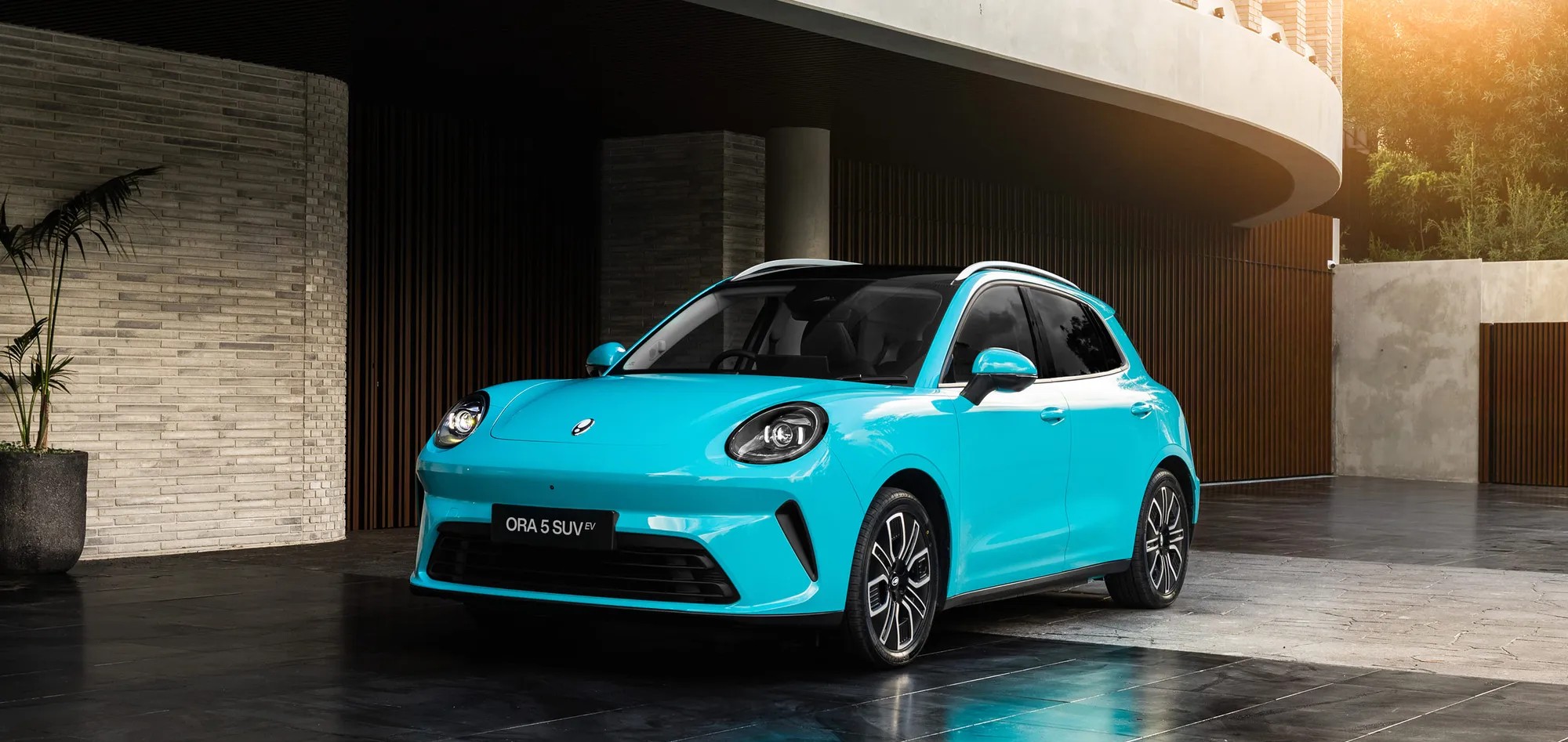
GWM ORA 5 SUV – Comprehensive Towing Review
The GWM ORA 5 SUV represents an important step forward for Great Wall Motor (GWM) as the Chinese manufacturer seeks to establish itself more firmly in the highly competitive global compact SUV market. Combining distinctive retro-inspired styling, modern technology, generous equipment and a choice of powertrains, the ORA 5 has been developed to appeal to motorists looking for something different from traditional European, Japanese and Korean alternatives.
Rather than relying solely on attractive exterior styling or an extensive list of technology features, the ORA 5 aims to deliver a well-rounded ownership experience. Its combination of practicality, comfort, performance and competitive pricing makes it an interesting proposition in a segment dominated by established manufacturers.
The vehicle also represents a change in direction for the ORA nameplate. Previously associated primarily with compact electric cars, the brand now adopts a more versatile approach, with the ORA 5 offered in different powertrain configurations depending on the market. These include petrol, conventional hybrid and fully electric versions, although availability varies between countries.
Exterior Design and Styling
The exterior design is arguably one of the ORA 5's most distinctive characteristics. Its appearance combines contemporary SUV proportions with retro-inspired styling details, creating a vehicle that stands apart from the increasingly similar designs found throughout the compact SUV category.
At the front, the rounded headlights provide a distinctive visual identity, recalling classic automotive designs without making the vehicle appear outdated. The sculpted bonnet, smooth front surfaces and carefully integrated lighting elements contribute to a friendly yet modern appearance. The front styling is relatively uncomplicated, allowing the characteristic headlight design to become the dominant feature.
Viewed from the side, the ORA 5 adopts conventional compact SUV proportions, with a relatively upright body, gently curved roofline and pronounced wheel arches. Its design is more substantial than that of the original ORA electric hatchback, giving it a stronger road presence and a more practical appearance. Decorative alloy wheels add character, while the relatively smooth bodywork helps maintain a clean and cohesive design.
At the rear, the vehicle features a modern lighting arrangement and a sculpted tailgate. The horizontal design elements visually emphasise the width of the vehicle, while the rounded body contours maintain continuity with the styling at the front.
Measuring approximately 4,471 mm in length, 1,833 mm in width and 1,641 mm in height, the ORA 5 occupies the compact SUV category. Its 2,720 mm wheelbase provides a useful foundation for interior passenger accommodation.
Overall, the exterior design is one of the vehicle's strongest selling points. It offers a distinctive alternative to the more conservative appearance of many mainstream compact SUVs, although its rounded styling may not appeal equally to every buyer.
Interior Design and Build Quality
The interior follows a modern, minimalist design philosophy, with particular emphasis on technology, visual simplicity and passenger comfort. The dashboard is dominated by a large central infotainment display, complemented by a digital instrument cluster positioned directly in front of the driver.
The overall presentation is contemporary and relatively uncluttered. Soft-touch surfaces and carefully arranged decorative elements help create an impression of quality that is competitive within the segment. The design also demonstrates GWM's intention to move beyond the perception that Chinese vehicles are primarily attractive because of their equipment levels and pricing.
Material quality is generally convincing, particularly in areas that occupants regularly interact with. The fit and finish are encouraging, and the cabin has a suitably modern atmosphere. However, the extensive use of digital controls means that some functions are less straightforward to operate than conventional physical switches.
The central touchscreen is approximately 14.6 inches, depending on specification, and provides access to vehicle settings, entertainment, navigation and connectivity functions. The digital instrument display offers essential driving information in a clear format.
Apple CarPlay and Android Auto availability, wireless smartphone connectivity and voice-control functions further enhance the technological appeal, although the precise equipment depends on the market and trim level.
The seating position is comfortable and provides a reasonably commanding view of the road. The front seats offer good everyday support, although some drivers may find the absence of more extensive lumbar adjustment disappointing on longer journeys.
The overall interior is therefore a positive aspect of the ORA 5. It feels modern, spacious and appropriately equipped, although its reliance on touchscreen controls demonstrates that technological sophistication does not always translate into better ergonomics.
Passenger Space and Practicality
Passenger accommodation is another area in which the ORA 5 performs encouragingly. The relatively long wheelbase helps create a spacious cabin, particularly for rear-seat occupants.
The front seats provide sufficient adjustment for most drivers, while the elevated seating position makes entering and leaving the vehicle relatively straightforward. The overall driving position is more characteristic of a conventional SUV than a low-slung hatchback.
Rear passenger accommodation is particularly competitive. Adults can be accommodated comfortably, with useful legroom and adequate headroom. The rear bench is designed primarily around everyday comfort rather than sporting support, making it suitable for family journeys and regular commuting.
The cabin also offers practical storage spaces for smaller personal belongings, while the rear seating area benefits from useful convenience features depending on specification.
Luggage capacity varies according to the powertrain. The petrol version offers approximately 422 litres, while the hybrid provides around 390 litres. The difference is worth considering for buyers who regularly transport pushchairs, holiday luggage or larger household items.
Although the boot is adequate for normal family use, it is not particularly generous when compared with some competitors. The loading height and available luggage space may also be less convenient for particularly bulky objects.
The rear seats can be folded to increase carrying capacity, making the vehicle more versatile when transporting larger items.
Overall, the ORA 5 offers a well-designed passenger compartment, although its luggage capacity is a more modest aspect of an otherwise practical family-oriented package.
To increase the practicality of your GWM be sure to install a Ora 5 towbar.
Towing with the GWM ORA 5 SUV
The GWM ORA 5 SUV is primarily designed as a compact family and everyday-use vehicle rather than a dedicated towing SUV. Its suitability for towing depends on the powertrain, vehicle specification and the maximum towing capacity approved by the manufacturer for the particular market.
This is an important consideration for buyers intending to tow a small caravan, camping trailer, boat or utility trailer.
Towing capacity
The maximum permitted braked and unbraked trailer weights should be confirmed against the vehicle's official technical documentation and registration certificate. A towing capacity should not be assumed simply because the vehicle has sufficient engine power.
Towing with the GWM ORA 5 SUV
The GWM ORA 5 SUV is capable of towing, but its suitability depends considerably on the engine configuration. It is primarily designed as a compact family SUV rather than a dedicated towing vehicle, although its towing figures make it suitable for smaller caravans, camping trailers, boat trailers and general-purpose utility trailers.
Importantly, the petrol version has a higher towing capacity than the hybrid and electric versions.
Official towing capacities
|
Powertrain
|
Braked trailer
|
Unbraked trailer
|
|
1.5-litre turbo petrol
|
1,200 kg
|
750 kg
|
|
1.5-litre hybrid
|
750 kg
|
750 kg
|
|
Fully electric
|
750 kg
|
750 kg
|
These figures are published in GWM's technical information for the relevant configurations. Individual national specifications should still be checked before towing.
Best towing choice
The 1.5-litre turbo petrol version is the strongest option for towing heavier trailers, offering a braked towing capacity of up to 1,200 kg.
The hybrid and electric versions are restricted to 750 kg braked towing capacity, which significantly limits their suitability for larger caravans.
Towing a caravan
For caravan owners, the petrol ORA 5 is the most practical choice. Its 1,200 kg braked capacity makes it suitable for smaller touring caravans, provided the fully loaded caravan remains within the vehicle's permitted towing limit.
The hybrid and electric versions are more restricted. Their 750 kg limits mean that they are better suited to lightweight camping trailers and small caravans rather than conventional family touring caravans.
The vehicle's relatively compact dimensions and front-wheel-drive configuration should also be considered when towing, particularly on steep gradients, slippery surfaces and uneven campsite access roads.
Towing performance and driving behaviour
The 1.5-litre turbocharged petrol engine produces approximately 160 horsepower and 270 Nm of torque. This should provide reasonable performance when towing a lightweight trailer.
The petrol engine's automatic dual-clutch transmission should make normal driving relatively straightforward, although frequent stop-start manoeuvring with a trailer will place additional demands on the transmission.
The hybrid version offers considerably more combined power, at 223 horsepower and 476 Nm of torque. However, its lower permitted towing capacity demonstrates that engine output alone does not determine a vehicle's towing capability.
The electric version offers immediate torque, which can be beneficial when moving away with a trailer. However, towing will increase electricity consumption and reduce driving range, potentially making longer journeys more demanding.
Overall towing verdict
The GWM ORA 5 is a reasonably capable light-duty towing vehicle, but the choice of powertrain is particularly important.
The petrol version stands out with its 1,200 kg braked towing capacity, making it the most suitable configuration for buyers who intend to tow a small caravan regularly.
The hybrid and electric versions are considerably more limited, with their 750 kg towing capacity making them better suited to smaller trailers.
For anyone considering the ORA 5 as a caravan-towing vehicle, the petrol version deserves the most attention.
Engine Options and Performance
One of the most interesting aspects of the ORA 5 is its flexible powertrain strategy. Unlike many newer SUVs that concentrate exclusively on electric propulsion, GWM offers different solutions to suit varying customer requirements.
The principal configurations include a 1.5-litre turbocharged petrol engine and a 1.5-litre hybrid system, alongside a fully electric version in selected markets.
The conventional petrol version produces approximately 160 horsepower and 270 Nm of torque. It is paired with an automatic dual-clutch transmission and front-wheel drive. Acceleration from 0 to 100 km/h takes approximately 8.9 seconds, providing sufficient performance for everyday driving, urban commuting and motorway journeys.
The hybrid version is considerably more powerful. Combining a 1.5-litre petrol engine with an electric motor, it produces a combined output of approximately 223 horsepower and 476 Nm of torque. This allows acceleration from 0 to 100 km/h in approximately 7.7 seconds.
The hybrid system is particularly attractive because it combines the convenience of conventional petrol refuelling with the additional efficiency and low-speed responsiveness of electric assistance. It does not require external charging, making it suitable for drivers who want electrified performance without changing their established driving habits.
The hybrid powertrain is likely to be the more appealing option for motorists who regularly drive in urban environments, where electric assistance can improve smoothness and reduce fuel consumption.
The fully electric ORA 5 SUV is another important part of the model's international identity. In selected markets, it is offered with a 150 kW electric motor producing 260 Nm of torque, supported by a 58.3 kWh lithium iron phosphate battery. Its claimed WLTP driving range is approximately 435 km. The electric version also supports DC fast charging at up to 120 kW.
These specifications apply to the electric configuration and should not be confused with the petrol and hybrid versions, which have different mechanical characteristics.
Driving Experience and Road Comfort
The ORA 5 has been developed primarily as a comfortable everyday SUV rather than a performance-oriented vehicle. Its suspension calibration, steering characteristics and overall driving behaviour reflect this objective.
On ordinary urban roads, the vehicle offers a comfortable driving environment. Its elevated seating position provides good visibility, while the relatively compact exterior dimensions make it manageable in congested streets and parking areas.
The suspension is designed to absorb everyday road imperfections without making the vehicle feel excessively soft. This creates a suitable balance for commuting, family transportation and longer journeys.
The steering is relatively light, which makes manoeuvring easier at low speeds. However, it does not provide the particularly communicative feedback that enthusiastic drivers might expect from more dynamically focused competitors.
The hybrid version has a clear performance advantage over the conventional petrol model. Its combined electric and petrol propulsion provides stronger acceleration, particularly when additional power is required during overtaking or when joining faster-moving traffic.
Nevertheless, the front-wheel-drive layout means that the available torque can occasionally challenge traction when accelerating aggressively from a standstill. This is particularly relevant in the more powerful hybrid configuration.
The ORA 5 is therefore better understood as a comfort-oriented family SUV than a vehicle designed for spirited cornering. Its priorities are ease of use, predictable handling and everyday refinement rather than outright driving excitement.
Fuel Economy and Efficiency
Fuel efficiency is an important consideration in the compact SUV category, particularly for buyers who intend to use their vehicles regularly for commuting and family transportation.
The hybrid ORA 5 has an official combined fuel consumption figure of approximately 5.1 litres per 100 kilometres, making it the more economical option on paper.
Real-world consumption will naturally depend on driving conditions, traffic, temperature, driving style and the proportion of urban and motorway journeys.
Road-test observations suggest that the hybrid can achieve approximately 6.2 litres per 100 kilometres in urban driving, while faster motorway journeys can increase consumption to approximately 7.7 litres per 100 kilometres.
These figures demonstrate that, although the hybrid system offers efficiency advantages, it should not automatically be assumed to deliver its lowest official consumption figures in every situation.
The conventional petrol model has a higher official consumption figure, at approximately 6.9 litres per 100 kilometres under the relevant WLTP specification.
For drivers who spend considerable time in urban traffic, the hybrid is likely to offer the better overall balance of performance and running costs. Motorists covering relatively low annual mileage may find the conventional petrol model sufficiently economical, particularly if its purchase price is lower.
The electric version presents a different ownership proposition altogether. Its claimed consumption is approximately 15.5 kWh per 100 kilometres, although actual energy consumption will depend on weather, speed and driving conditions.
Technology and Infotainment
Technology is one of the strongest selling points of the ORA 5. GWM has equipped the vehicle with a modern digital environment that aims to provide the functionality and convenience increasingly expected by contemporary SUV buyers.
The central infotainment screen is approximately 14.6 inches, while the digital instrument display measures approximately 10.25 inches. Together, they provide the driver with access to vehicle information, multimedia functions and various convenience settings.
The infotainment system is designed to offer a contemporary user experience, with smartphone connectivity, voice commands and access to selected vehicle functions.
Wireless Apple CarPlay and Android Auto are particularly useful features, allowing compatible smartphones to connect without requiring a physical cable. This makes everyday use more convenient, particularly for motorists who regularly rely on smartphone navigation and music applications.
Depending on specification, additional equipment includes wireless smartphone charging, a panoramic sunroof, electric seat adjustment and an electrically operated tailgate.
One particularly useful feature is the 540-degree camera system available in certain versions. It provides a comprehensive view around the car and includes an additional representation of the area beneath the vehicle, helping the driver understand the immediate surroundings when manoeuvring.
Despite the impressive technology offering, the infotainment system is not without shortcomings. Some functions are accessed through touchscreen menus rather than dedicated physical controls. Climate adjustment, in particular, could be more intuitive.
This is a recurring criticism of modern vehicles that prioritise minimalist dashboards over traditional ergonomics. Although the screen looks sophisticated, frequently used functions are generally easier to operate when they have dedicated physical switches.
Overall, the ORA 5 offers a strong technology package for its category, although software responsiveness, menu organisation and the ease of accessing everyday controls remain important areas for continued improvement.
Safety and Driver Assistance
Safety is an important consideration for any family-oriented SUV, and the ORA 5 benefits from a comprehensive selection of modern driver assistance systems.
Depending on market and equipment level, the vehicle offers adaptive cruise control, autonomous emergency braking, lane-keeping assistance, lane departure warning, blind-spot monitoring and traffic sign recognition.
Additional systems include rear cross-traffic alert, parking sensors and camera technology.
These features are designed to reduce driver workload and provide additional assistance in potentially hazardous situations. Adaptive cruise control is particularly useful during longer motorway journeys, while blind-spot monitoring and rear cross-traffic alerts can assist when changing lanes or reversing.
The availability of multiple airbags and electronic stability control further contributes to the vehicle's safety equipment.
However, the presence of numerous driver assistance systems does not automatically establish that a vehicle offers class-leading crash protection. A definitive assessment requires independent crash-test results for the exact model and specification.
The calibration of the electronic assistance systems also deserves attention. Some road-test observations have highlighted overly sensitive driver-monitoring behaviour and inconsistencies in the operation of certain assistance functions. These characteristics can affect everyday comfort and should be assessed during an extended test drive.
Equipment and Value for Money
The ORA 5 has been positioned as a competitively priced alternative to established compact SUVs, with GWM placing considerable emphasis on standard equipment.
Its equipment structure provides a substantial collection of convenience and technology features, meaning that buyers do not necessarily need to select the most expensive version to obtain a well-equipped vehicle.
Higher specifications add further luxury-oriented features, including a panoramic glass roof, artificial leather upholstery, additional electric seat adjustment, a heated steering wheel, ventilated front seats and an electrically operated tailgate.
The vehicle's value proposition is particularly interesting when comparing the different powertrains. The relatively small price difference between some petrol and hybrid configurations can make the latter especially attractive. Buyers receive considerably more power, additional electric assistance and the potential for improved fuel efficiency.
Reliability and Long-Term Ownership
As a relatively new model, the GWM ORA 5 does not yet have the extensive long-term reliability record enjoyed by established competitors from Toyota, Hyundai, Kia and Volkswagen.
GWM is an experienced automotive manufacturer with substantial engineering and production capabilities. Nevertheless, the ORA 5 represents a newer product and should be assessed independently rather than relying entirely on the manufacturer's wider reputation.
The petrol engine and conventional hybrid system are familiar automotive technologies, which should make the vehicle less dependent on specialist electric-vehicle infrastructure than a fully electric alternative.
However, the complexity of modern infotainment systems, electronic driver assistance features and hybrid components means that long-term software support and dealer expertise will be important.
The availability of replacement parts, the development of the dealership network and the quality of aftersales support will also influence the ownership experience.
The warranty is an encouraging starting point, but potential buyers should investigate its coverage, servicing requirements and exclusions before committing to a purchase.
Resale value is another consideration. Established brands generally benefit from stronger market recognition, whereas newer manufacturers are still developing customer confidence in some international markets. The ORA 5 may therefore experience greater uncertainty regarding depreciation during its early years on the market.
Overall Driving Character and Everyday Usability
The overall character of the ORA 5 is best described as comfortable, accessible and technology-focused.
It has been developed for motorists who want the elevated driving position and practicality of an SUV without necessarily purchasing a large or expensive vehicle.
Its compact dimensions make it suitable for urban environments, while the spacious rear passenger compartment provides sufficient comfort for family use. The hybrid powertrain adds a useful performance advantage, and the extensive equipment list makes the cabin feel modern.
However, the vehicle is not without compromises. The relatively modest boot capacity, touchscreen-dependent controls and some shortcomings in electronic system calibration prevent it from being an entirely convincing class leader.
Its driving dynamics are also more focused on comfort than engagement. Drivers who prioritise precise steering, sporty handling or particularly refined motorway behaviour may find some established alternatives more satisfying.
Nevertheless, the ORA 5 demonstrates that GWM has developed a credible product for mainstream buyers rather than simply offering an inexpensive alternative with an attractive specification sheet.
Final Verdict
The GWM ORA 5 SUV is a significant addition to the compact SUV market and an encouraging demonstration of how far Chinese automotive manufacturers have progressed in developing vehicles for international customers.
Its strongest attributes are its distinctive exterior styling, comfortable and spacious passenger compartment, extensive standard equipment and competitive pricing. The availability of petrol, hybrid and fully electric configurations in selected markets also gives buyers greater flexibility.
The hybrid version is arguably the most convincing configuration. Its 223 horsepower and 476 Nm of combined torque provide strong performance, while its conventional hybrid arrangement avoids the need for external charging. Its official fuel consumption figure is also competitive, although real-world results will vary.
The petrol version remains a sensible alternative for buyers prioritising a lower initial purchase price, while the fully electric configuration will appeal to motorists in markets where it is available and where charging infrastructure suits their requirements.
The principal concerns relate to the relatively small luggage compartment, touchscreen ergonomics, the calibration of certain electronic systems and the uncertainty surrounding long-term resale values and reliability.
There is also the question of brand recognition. GWM still has considerable work to do in establishing the same level of customer confidence and aftersales familiarity enjoyed by established European, Japanese and Korean manufacturers.
Ultimately, the ORA 5 is a well-equipped and appealing compact SUV that offers a convincing combination of comfort, technology, performance and value. It may not yet have the overall refinement or established reputation of the segment leaders, but it represents a serious alternative rather than a novelty.
For buyers who appreciate distinctive styling, want substantial equipment without paying premium-brand prices and are comfortable considering a newer automotive manufacturer, the GWM ORA 5 deserves serious consideration.
Overall assessment: The GWM ORA 5 is a promising, well-rounded compact SUV with particularly strong value in its hybrid configuration. Its greatest achievement is offering a modern, comfortable and generously equipped package at a competitive price, while its biggest challenge will be demonstrating the long-term reliability, refinement and ownership support necessary to compete with the industry's established names.
Need to increase the practicality of your GWM, be sure to fit one of our Ora 5 towbars. Order your GVM Ora 5 SUV towbar today!


 The tow bar becomes completely invisible - the lines of your car are not spoiled in the slightest.


 Select your Vehicle


