How much can the BYD Seal 6 tow? Maximum Seal 6 towing capacity. Need a BYD Seal 6 towbar?
The BYD Seal 6 represents a very deliberate shift in how mainstream family cars are being positioned. Rather than chasing driving excitement or brand prestige, BYD has focused almost entirely on efficiency, interior space, and value for money, using its DM-i plug-in hybrid system as the central selling point. The result is a car that feels engineered with spreadsheets rather than passion, yet one that is difficult to dismiss once you live with it.
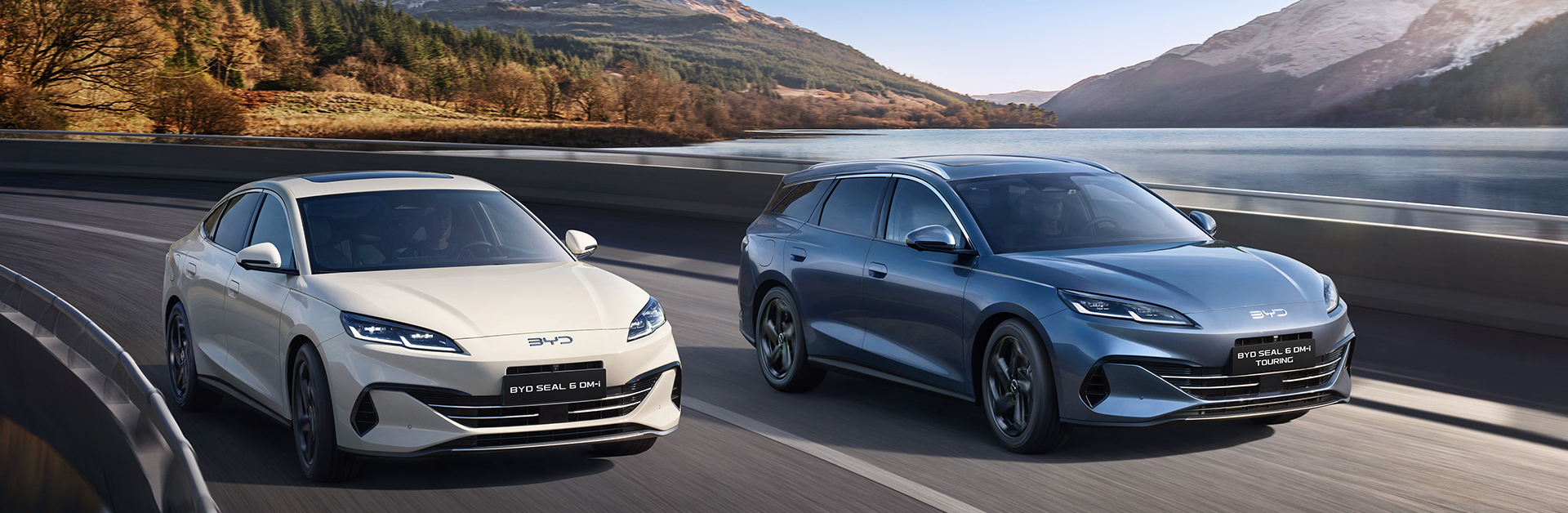
At first glance, the Seal 6’s exterior design is conservative but clean. It avoids the aggressive styling flourishes seen on many modern saloons, instead opting for smooth surfacing and a restrained silhouette that would not look out of place in a corporate fleet car park. The Touring (estate) version in particular looks well-proportioned, with a long roofline and subtle detailing that emphasises practicality over flair. It will not turn heads, but it also avoids ageing quickly, which suits the car’s intended role.
Under the skin, the Seal 6 is defined by BYD’s DM-i plug-in hybrid system. This is an electric-first setup where the petrol engine spends much of its time acting as a generator rather than directly driving the wheels. In everyday use, especially around town or on short commutes, the car behaves very much like a fully electric vehicle. It pulls away silently, responds smoothly to throttle inputs, and glides through traffic with an ease that many traditional hybrids struggle to match. When the petrol engine does engage, it does so unobtrusively most of the time, though under heavier acceleration it becomes noticeably coarse and strained, reminding you that performance was never the priority here.
There are two main versions, but the larger-battery Comfort model is clearly the sweet spot. Its electric-only range is long enough that many drivers could complete most of their weekly driving without using any petrol at all, provided they charge regularly. This fundamentally changes the ownership experience compared with older plug-in hybrids that offered only token EV capability. In mixed real-world driving, the Seal 6 rewards disciplined charging habits with impressively low fuel consumption, though those who rarely plug in will see efficiency drop sharply once the battery is depleted.
On the road, the Seal 6 prioritises comfort above all else. At motorway speeds it settles into a relaxed, quiet cruise, isolating occupants from wind and road noise better than you might expect at this price point. The suspension is tuned softly, which works well on smooth roads and long journeys, but this approach is not without compromise. On rougher urban surfaces the car can feel unsettled, with sharper bumps sending noticeable thumps through the cabin. When pushed harder on twisty roads, the lack of body control and the light, numb steering make it clear that enthusiastic driving was never part of the brief. This is a car that prefers to be driven gently and predictably, and it feels happiest when treated as a comfortable transport appliance rather than a machine to be enjoyed for its dynamics.
Inside, the Seal 6 continues this theme of rational design. The cabin layout is clean and modern, dominated by a large central touchscreen that controls most vehicle functions. Physical buttons are kept to a minimum, which looks sleek but can be frustrating when adjusting common settings on the move. Material quality is generally better than expected, with soft-touch surfaces in key areas and solid overall assembly, although some harder plastics betray the car’s cost-conscious roots. Space is one of the Seal 6’s strongest assets. Rear-seat passengers enjoy generous legroom and a flat floor, while the Touring version in particular offers a cavernous boot that rivals or exceeds many established estate cars in the class.
Technology is both a strength and a weakness. The infotainment system is feature-rich, offering smartphone connectivity, multiple vehicle customisation options, and a clear digital instrument display. However, the car’s driver assistance systems can be overbearing. The driver monitoring camera is especially intrusive, issuing frequent warnings even when the driver’s attention has not meaningfully lapsed. Over time, this can erode the otherwise calm driving experience and has been a point of near-universal criticism from reviewers.
Charging flexibility is another area where the Seal 6 stands out positively. Unlike many plug-in hybrids, it supports relatively fast DC charging, allowing the battery to be replenished more quickly when needed. Combined with vehicle-to-load functionality on higher trims, this makes the Seal 6 feel more forward-thinking than many rivals that treat electrification as an afterthought rather than a core feature.
In terms of safety and ownership, the Seal 6 presents a strong on-paper case. It achieves top crash-test ratings and comes with an extensive list of standard safety equipment. BYD’s long warranty coverage, particularly for the battery, adds reassurance, though real-world ownership experiences suggest that dealer networks and customer support still lag behind more established brands in some regions.
When it comes to towing, the BYD Seal 6 needs to be approached with realistic expectations, because although it looks like a large, capable family car, it is not designed to be a heavy-duty tow vehicle.
The Seal 6 (both saloon and Touring estate) is officially rated to tow up to 750 kg unbraked, with no higher braked towing capacity approved . That figure applies across both Boost and Comfort trims and reflects regulatory approval rather than raw power availability.
In practical terms, this means the Seal 6 is suitable for light-duty towing only. Small box trailers, garden trailers, bike carriers, lightweight dinghies, or very small camping trailers fall within its intended use. Anything larger—such as caravans, horseboxes, or loaded utility trailers—quickly exceeds its legal and mechanical limits. Even though the electric motor produces strong low-speed torque, the car’s front-wheel-drive layout, cooling system calibration, and chassis tuning are not engineered for sustained high-load towing.
From a driving perspective, towing within the 750 kg limit is reported to feel initially easy at low speeds thanks to the electric motor’s instant torque. Pulling away from junctions or manoeuvring a light trailer is smooth and controlled. However, once speeds increase or gradients steepen, the limitations become more obvious. The petrol engine has to work much harder to maintain battery charge and propulsion simultaneously, and when under sustained load it becomes loud and coarse. This is especially noticeable on hills or long motorway inclines, where energy consumption rises sharply and the system prioritises drivetrain protection over efficiency.
Stability is adequate but not confidence-inspiring. The Seal 6’s suspension is tuned for comfort rather than load control, and with a trailer attached the rear can feel softly sprung, particularly over uneven roads. Steering remains light and somewhat vague, which is fine for relaxed cruising but less reassuring when dealing with crosswinds or passing heavy vehicles while towing. For occasional, short-distance towing this is acceptable; for frequent use it quickly becomes tiring.
Another important consideration is payload and nose weight. While official documentation confirms a maximum unbraked trailer weight of 750 kg, owners must also remain within rear axle load and vertical towball limits. Overloading the rear—especially in the Touring version with a full boot and passengers—can push the car close to its permissible mass limits surprisingly quickly, reducing safety margins .
Charging and efficiency behaviour also changes when towing. Electric-only driving becomes largely irrelevant, as the system will rely heavily on the petrol engine to maintain charge under load. Fuel consumption rises sharply compared with solo driving, and the impressive headline efficiency figures no longer apply. This does not indicate a fault, but rather highlights that the DM-i system is optimised for efficiency, not sustained mechanical strain.
If you Seal is rated to tow, our removable tow balls are suitable for light trailers or bike racks.
In summary, towing with the BYD Seal 6 is possible but limited. It is best thought of as a car that can occasionally tow something light rather than one that is designed around towing as a regular task. The Seal 6’s strengths lie in efficiency, comfort, and value—not a great tow car for heavy loads, but will take care of a small box trailer, or to take bikes along on your next week away.
Ultimately, the BYD Seal 6 is best understood not as a rival to sporty executive saloons, but as a modern replacement for traditional family workhorses like the Mondeo or Passat. It is not engaging to drive, nor is it especially refined when scrutinised closely, but it offers a compelling blend of space, electric range, and pricing that few competitors can match. For buyers who value efficiency, practicality, and low running costs over brand image or driving pleasure, the Seal 6 makes a strong and increasingly hard-to-ignore case.
Order your BYD Seal 6 towbar today
.


 The tow bar becomes completely invisible - the lines of your car are not spoiled in the slightest.

 Select your Vehicle


