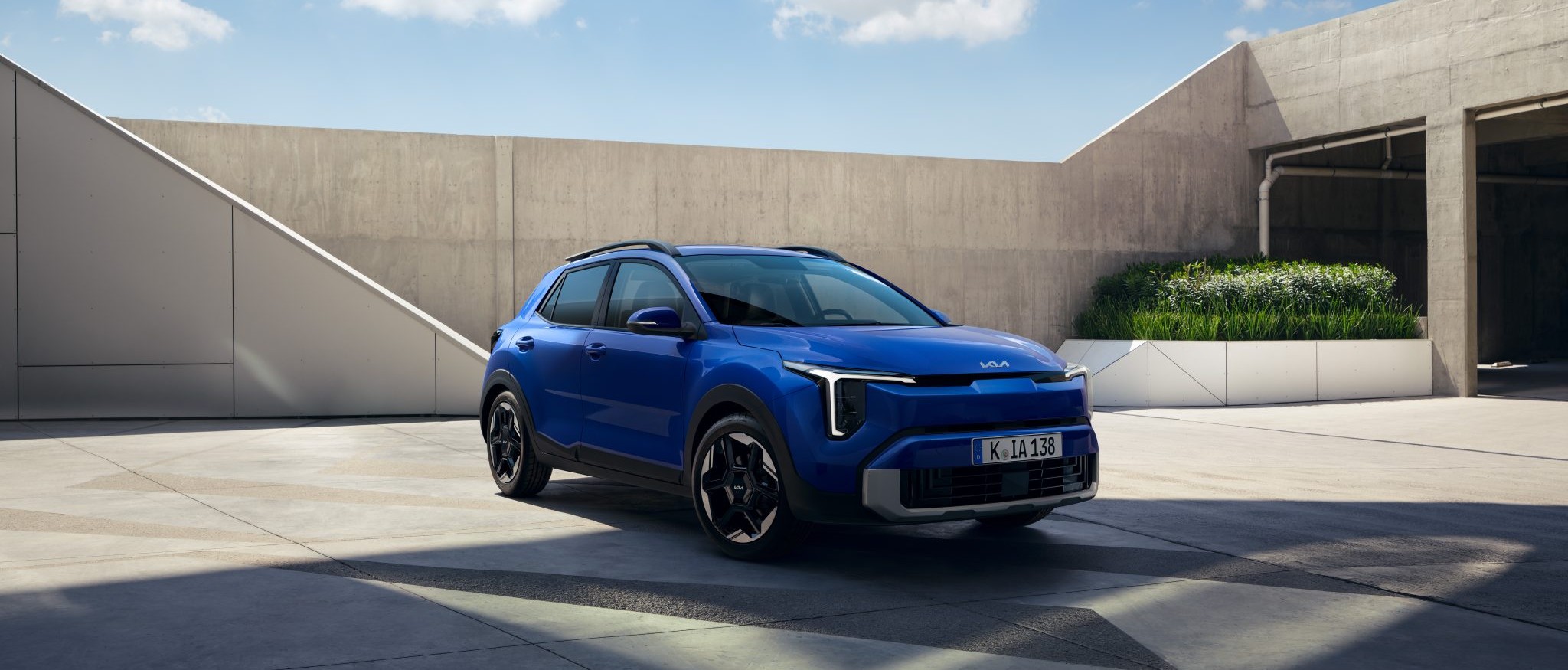
Kia Stonic facelift review – Can the new Stonic tow?
The facelifted Kia Stonic occupies an unusual position in the current European small-SUV market. At first glance, it appears to be a completely new model. The front end has been heavily redesigned, the lighting is far more sophisticated, the interior has been brought into line with Kia's latest products and the dashboard now has a distinctly modern digital appearance. Yet underneath that contemporary presentation is a car whose fundamental architecture dates back to the original Stonic introduced in 2017.
That contrast defines the new Stonic. It is a car that feels substantially newer than its mechanical foundations suggest, and whether that is considered an advantage or a limitation depends largely on what a buyer expects from a modern small crossover.
Exterior design
The facelift gives the Stonic a considerably stronger visual identity. The previous version had a somewhat conservative appearance, with rounded surfaces and a relatively conventional front end that increasingly made the car look like a product from an earlier era of Kia's design language. The facelift replaces that appearance with a much sharper and more technical design.
The front of the car is particularly successful. The new lighting signature gives the Stonic a visual connection with Kia's larger and newer models, while the redesigned grille and bumper make the car appear wider and more planted. The LED daytime-running lights have a more distinctive graphic, and the overall front treatment gives the impression of a substantially more expensive vehicle.
The rear has also been modernised, although the transformation is less dramatic. The new lighting arrangement and revised bumper make the car look cleaner and more contemporary, but the side profile reveals the age of the underlying design. The roofline, windows and basic body proportions remain recognisably those of the original Stonic.
That is not necessarily a problem. The Stonic remains a relatively compact vehicle, and its dimensions are one of its advantages in European cities. At around 4.17 metres long, it remains considerably easier to place in a parking space or narrow urban street than many of the increasingly large SUVs that occupy the same broad market category.
The facelift therefore succeeds particularly well at making the Stonic look current without making it physically much larger.
The more heavily styled versions, particularly the GT-Line, give the car a noticeably sportier character. Larger wheels, darker exterior details and more aggressive bumpers make the Stonic look considerably more sophisticated. There is, however, a trade-off. The larger wheels contribute to a firmer ride, meaning that the visually most attractive version is not necessarily the most comfortable configuration.
Interior
The interior represents perhaps the greatest transformation.
The previous Stonic had a straightforward, functional cabin, but it was increasingly obvious that its dashboard belonged to an earlier generation of Kia products. The facelift changes that impression almost immediately. The large digital displays,revised dashboard architecture and contemporary steering wheel give the cabin a much more expensive appearance.
The digital presentation is especially effective because it does not completely abandon conventional controls. Kia has resisted the temptation to put every function behind a touchscreen. Important functions remain relatively easy to access, which makes the interior more practical during everyday driving.
The large displays also change the atmosphere of the cabin. A driver sitting behind the wheel could easily mistake the Stonic's dashboard for that of a considerably newer Kia model. The technology feels contemporary even though the fundamental cabin architecture is not new.
There is, however, a difference between visual modernity and material quality. The Stonic still uses quite a lot of hard plastic. The surfaces are durable and appropriately assembled, but they do not provide the soft-touch, premium impression found in some of the more expensive competitors. The screens make the cabin look sophisticated; closer inspection reminds the occupants that this remains a relatively affordable B-segment crossover.
The driving position is one of the more successful elements. The seats provide a slightly elevated viewpoint without making the driver feel as though he or she is sitting in a large SUV. Visibility is generally good, and the compact dimensions make the car easy to position in urban environments.
The cabin's biggest limitation is its age underneath the redesign. The dashboard looks new, but the passenger compartment has not suddenly become larger. Front occupants have enough room for long journeys, but the rear seats remain much more appropriate for children or average-sized adults than for tall passengers.
A family with two children should find the Stonic perfectly usable. A family regularly carrying four large adults will discover that the limited rear legroom becomes noticeable.
The driving experience
The Stonic's driving character is best described as easy-going rather than sporty.
The facelift does not attempt to transform the car into a performance-oriented crossover. Its steering is relatively light, the controls are easy to operate and the compact body makes it particularly comfortable in urban traffic. It is the kind of vehicle that requires little effort from its driver.
The 115-horsepower 1.0-litre turbocharged three-cylinder engine is a sensible match for the car. It does not provide particularly exciting acceleration, but it has enough torque to keep the Stonic moving comfortably in normal traffic.
The mild-hybrid system is worth understanding properly. It is not a full hybrid system in the sense of a Toyota Yaris Cross. The electric system assists the petrol engine and improves efficiency during starting, stopping and coasting, but it does not turn the Stonic into an electric-driving vehicle.
In normal urban driving, the system makes the powertrain feel smoother and helps reduce fuel consumption. The result is a drivetrain that feels relatively conventional while gaining some of the efficiency advantages of electrification.
The 115-horsepower engine is particularly well suited to drivers who spend most of their time in cities and on secondary roads. It is sufficiently responsive for normal overtaking, although it does not have the effortless mid-range acceleration associated with larger engines.
The three-cylinder character becomes more obvious when the engine is pushed hard. Acceleration produces a noticeable engine note, and the Stonic does not have the refinement of a larger four-cylinder petrol engine.
This becomes more apparent on motorways. At higher speeds, tyre and wind noise are more noticeable than they would be in a larger and more expensive crossover. The engine itself can also become quite vocal when strong acceleration is required.
The result is a car that feels considerably more comfortable at 80–110 km/h than it does when spending hours at 140 km/h on a motorway.
The automatic gearbox
The seven-speed dual-clutch transmission makes the Stonic easier to live with in heavy traffic. For an urban driver, the combination of the small turbocharged engine, mild-hybrid system and automatic gearbox creates a fairly effortless driving experience.
At normal speeds, the transmission is generally smooth and unobtrusive. Nevertheless, a dual-clutch gearbox has a different character from a traditional torque-converter automatic. At very low speeds, particularly during parking manoeuvres or when crawling through congestion, the driver may occasionally notice the transmission engaging the clutch.
That characteristic is not unique to the Stonic, but it is something that should be evaluated during a test drive. A prospective buyer should spend time reversing, parking, creeping through traffic and accelerating gently from very low speeds rather than judging the gearbox solely from a normal road drive.
The six-speed manual remains an appealing alternative for someone who values simplicity and direct control. It also avoids the particular low-speed characteristics of the DCT.
Ride and handling
The Stonic has never been intended to be a miniature hot hatch, and the facelift does not change that philosophy.
Its compact dimensions make it pleasant on winding urban streets, while the relatively light steering makes parking straightforward. There is enough body control to make the car feel secure when driven more enthusiastically, but its natural preference is for relaxed driving.
Ride quality is largely dependent on specification.
The smaller wheels provide a more compliant experience, while the larger 17-inch wheels look considerably better but transmit more of the road surface into the cabin. On poor-quality European roads, that difference can be significant.
The Stonic therefore works best when configured as a comfortable everyday crossover rather than as a fashion-focused GT-Line with the largest wheels available.
Practicality
The Stonic's practicality is reasonable rather than exceptional.
The boot is useful for a car of this size, and the rear seats fold to create substantially more luggage capacity. For everyday shopping, luggage for a couple and normal family use, there is enough space.
The limitations appear when the car is used like a larger family SUV. The rear seats do not provide exceptional legroom, and the relatively narrow body limits the sense of spaciousness. Two adults can travel in the back without major problems, but three adults will find the rear bench restrictive.
This is an important distinction because the Stonic's exterior styling can make it appear larger than it actually is. It is fundamentally a compact crossover derived from the small-car segment rather than a shrunken version of a conventional family SUV.
Technology
Technology is one of the facelift's strongest arguments.
The modern digital displays, smartphone connectivity, USB-C charging and Kia's connected services make the Stonic feel substantially more contemporary than the outgoing version. Depending on market and equipment, the car can also be equipped with adaptive cruise control, blind-spot monitoring, lane assistance and more advanced collision-avoidance systems.
The technology is particularly convincing because the Stonic does not rely exclusively on a touchscreen interface. Physical controls remain available for important functions, which reduces the frustration associated with some newer vehicles that have attempted to digitise almost everything.
There is still some inconsistency in the user experience depending on specification. In some European configurations, smartphone integration remains wired even though wireless phone charging is available. That is a slightly strange combination in a car whose overall presentation is otherwise very modern.
Safety
The facelift benefits from considerably more contemporary driver-assistance technology than the original Stonic.
The availability of blind-spot assistance, adaptive cruise control, lane assistance and forward-collision technology makes the car much better equipped for modern traffic than the original model.
The important caveat is that the old Stonic's Euro NCAP result should not be interpreted as a current assessment of the facelift. The earlier rating is associated with the previous generation of the vehicle and the related Kia Rio testing programme. The facelift's additional electronic safety systems represent a substantial change, but they do not constitute a completely new crash-test assessment.
That distinction is important when comparing the Stonic with newer competitors that have been tested under more recent Euro NCAP protocols.
Fuel consumption
The 115-horsepower mild-hybrid version has relatively modest fuel requirements.
In mixed driving, consumption in the region of 5.5–6.5 litres per 100 kilometres is a reasonable expectation depending on traffic, temperature, speed and driving style. Urban driving can push the figure higher, while gentle secondary-road driving can bring it down.
The mild-hybrid system is most useful in precisely the situations where a small petrol engine tends to consume more fuel: repeated acceleration, stopping and starting and low-speed urban driving.
It should nevertheless not be confused with a full hybrid. The Stonic's fuel economy is good for a small turbocharged petrol crossover, but it does not have the urban efficiency of a full hybrid such as the Toyota Yaris Cross.
Refinement
Refinement is probably the area where the Stonic reminds its occupants most clearly of its age.
At low and medium speeds, it is perfectly pleasant. The engine is relatively unobtrusive when driven gently, the suspension is acceptable and the cabin feels comfortable.
At motorway speeds, however, the character changes. Wind and tyre noise become increasingly prominent, and stronger acceleration brings the three-cylinder engine into the foreground.
This is not a disastrous weakness because the Stonic remains fundamentally a small car. Nevertheless, someone who regularly drives several hundred kilometres on motorways will probably appreciate a larger, more heavily insulated vehicle.
Ownership
Kia's long warranty remains one of the Stonic's most attractive ownership arguments, it gives the car a particularly reassuring ownership proposition.
The mechanical package is also relatively conventional. There is no large battery pack or plug-in hybrid system, and the 48V mild-hybrid system is considerably simpler than the drivetrain of a full hybrid or electric vehicle.
The 1.0-litre turbocharged engine is also a familiar type of powertrain rather than an experimental technology.
The seven-speed DCT introduces more mechanical complexity than the manual version, so a buyer intending to keep the vehicle for many years and prioritising mechanical simplicity may prefer the manual. Conversely, someone spending most of the working week in congested city traffic may value the automatic gearbox considerably more.
The fundamental question
The most interesting thing about the facelifted Stonic is that it creates a tension between appearance and substance.
The exterior looks new. The interior looks new. The screens look new. The driver can be advantages to using a mature architecture. The car is relatively light, compact and mechanically straightforward. Kia has had years to refine the basic concept-assistance technology looks new.
The basic vehicle underneath is not.
That does not make the Stonic a bad car. In fact, there can be advantages to using a mature architecture. The car is relatively light, compact and mechanically straightforward. Kia has had years to refine the basic concept.
But the facelift cannot completely overcome limitations that come from the original dimensions. The rear seats cannot suddenly become spacious without extending the wheelbase, and motorway refinement cannot be transformed without substantially re-engineering the body, suspension and sound insulation.
The result is a car that is best understood as a thoroughly modernised version of an established small crossover rather than a completely new small crossover.
Overall character
The facelifted Kia Stonic is at its most convincing when used as a compact urban and suburban car. Its small footprint, elevated driving position, straightforward controls, contemporary technology and modest petrol engine make it easy to live with. It has enough performance for ordinary city driving, and the mild-hybrid system adds a useful degree of efficiency without making the powertrain complicated to understand.
Its limitations become more apparent when it is asked to perform the duties of a larger family SUV. Rear-seat space is only average, motorway refinement is not exceptional and the interior's material quality does not quite match the sophistication suggested by its large digital displays.
The facelift nevertheless changes the Stonic's character substantially. The original car increasingly felt like an ageing model that was being kept alive. The new version feels deliberate and contemporary. It has the visual language, connectivity and driver-assistance technology expected from a modern Kia, even though its fundamental engineering is older.
The most accurate description would therefore be that the new Stonic is an old-school compact crossover that has received a remarkably comprehensive modernisation. Its appeal lies less in any single outstanding characteristic and more in the balance between compact dimensions, reasonable performance, modern technology, straightforward petrol power and Kia's long warranty.
For someone who wants a small crossover that is easy to drive and park, visually contemporary and equipped with modern technology, the facelift makes the Stonic considerably more relevant than before. For someone looking primarily for maximum rear-seat space, motorway refinement or hybrid efficiency, the limitations of the underlying car become much more significant.
Towing with the Kia Stonic
The Kia Stonic can tow, but it is important to understand that it is fundamentally a light-duty towing vehicle rather than a small SUV designed for substantial trailers. The facelift does not turn it into a particularly capable tow car, and the exact legal towing limit depends on the engine, gearbox and market specification.
For the facelifted Stonic the maximum braked-trailer capacity is 900kgs. The unbraked limit is typically around 450–500 kg.
That makes the Stonic suitable for things such as a small camping trailer, lightweight utility trailer, small boat trailer or a modest caravan. It is much less suitable for a large caravan or heavily loaded trailer.
How does it feel while towing?
The 115 PS engine is adequate rather than powerful. Its 200 Nm of torque gives it enough pulling power for a relatively light trailer, but the small 1.0-litre three-cylinder engine has to work fairly hard when the combined weight increases.
On flat roads with a trailer of perhaps 700–900 kg, the Stonic should feel reasonably comfortable. Acceleration will naturally be slower, but it should not feel desperately underpowered.
The situation changes on hills and at motorway speeds. A loaded trailer increases aerodynamic drag dramatically, and the 1.0-litre engine will need higher revs and more frequent acceleration effort. Overtaking becomes something that needs planning rather than something the driver can do casually.
The DCT automatic is convenient when towing, particularly in traffic and on gradients, but it is worth remembering that a dual-clutch transmission uses clutches rather than a traditional torque converter. Slow manoeuvring with a trailer—particularly reversing uphill or repeatedly moving a heavy trailer a few metres—requires some mechanical sympathy.
The manual version gives the driver more direct control over gear selection and clutch engagement, although the DCT is considerably more convenient for everyday urban driving.
Stability is more important than engine power
With a small car such as the Stonic, trailer stability becomes particularly important as the trailer approaches the vehicle's maximum permitted weight.
A trailer of 900 kg behind a relatively light crossover represents a substantial proportion of the car's own mass. The combination can therefore be affected more strongly by crosswinds, passing trucks, sudden steering inputs and poor trailer loading than a heavier tow vehicle would be.
A properly loaded trailer makes a huge difference. Keeping the centre of gravity low, distributing the load correctly and maintaining appropriate nose weight are more important than trying to compensate for the Stonic's modest engine with aggressive driving.
For motorway towing, a lighter trailer is considerably more appropriate than one approaching the absolute maximum.
Caravan towing
This is where the Stonic's limitations become most apparent.
A small lightweight caravan is possible, but the Stonic would not be the vehicle of choice for a large family caravan. A caravan approaching the Stonic's maximum permissible trailer weight would leave relatively little reserve for gradients, headwinds and overtaking.
A sensible approach would be to choose a caravan whose fully loaded actual weight is comfortably below the Stonic's maximum, rather than selecting one whose theoretical maximum technically falls just below the legal limit.
This also matters because caravan specifications can be misleading. A caravan advertised as weighing, for example, 850 kg empty can become substantially heavier once water, gas, battery, food, luggage and camping equipment are added.
The 100 PS version
The 100 PS version is less attractive for towing simply because it has less power and torque available. If towing is an important part of the car's intended use, the 115 PS MHEV makes considerably more sense.
Even then, the Stonic should be regarded as a car for light trailers, not as a replacement for a larger SUV or estate designed around towing.
A useful way to think about it
The Stonic is quite different from something such as a Kia Sportage in this respect.
The Sportage has considerably more mass, more powerful engines and substantially greater towing capacity. The Stonic's advantage is that it is inexpensive, compact and economical when not towing.
So the Stonic makes sense when towing is occasional and relatively light.
One important caveat is that the exact towing figures must be checked against the individual Stonic's registration/VIN documentation, because Kia's permitted trailer weight can vary with engine, gearbox, wheel/tyre configuration and market. The figure on the vehicle's registration documents is the legally relevant one.
Order one of our Kia Stonic towbars today!


 The tow bar becomes completely invisible - the lines of your car are not spoiled in the slightest.

 Select your Vehicle


