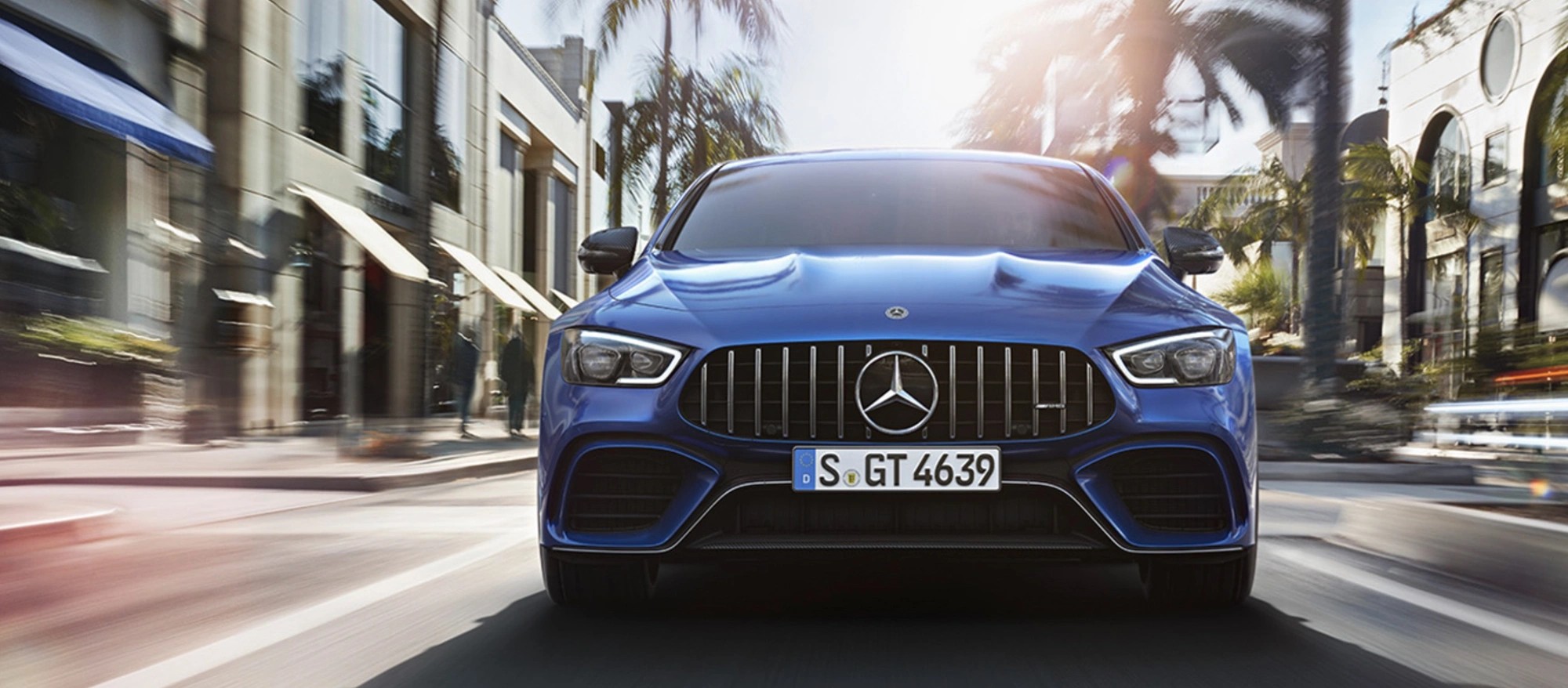
Mercedes-AMG GT 4-Door Coupe: Comprehensive Towing Review – need a towbar?
The Mercedes-AMG GT 4-Door Coupé is one of Mercedes-AMG's most ambitious performance cars: a luxurious, high-powered grand tourer designed to combine the pace and drama of a sports car with the practicality of a four-door executive vehicle.
Introduced in 2018, it was developed by Mercedes-AMG rather than simply being a conventional Mercedes-Benz saloon with a more powerful engine. Its purpose was to offer a distinct alternative to the Porsche Panamera, BMW M8 Gran Coupé and Audi RS7 Sportback.
The result is a car with a fascinating dual personality. It can behave like a comfortable, refined long-distance cruiser, yet, in its more powerful versions, it has the acceleration, chassis technology and engine character of a serious supercar.
One important distinction: the AMG GT 4-Door Coupé is not the same car as the two-door AMG GT sports car. The four-door model has its own platform, four-door body structure and practical rear seating arrangement. The 2018–2026 period also covers the original model's development and later updates, rather than a single unchanging specification.
1. Model history and evolution
The original car arrived in 2018, with customer deliveries following in the early production period. It introduced a new interpretation of the four-door performance coupé: a low roofline, a long bonnet, a wide stance, a luxurious cabin and engine options ranging from turbocharged six-cylinder power to a hand-built V8.
The original generation's principal versions were the GT 43, GT 53, GT 63 and GT 63 S, with additional plug-in-hybrid E PERFORMANCE derivatives arriving later.
2018–20
The original launch
The car established its identity with six-cylinder GT 43 and GT 53 versions and V8-powered GT 63 and GT 63 S models. The range combined everyday usability with very high performance.
2021–22
The range expands
The GT 63 S E PERFORMANCE introduced plug-in-hybrid technology to the flagship end of the range. The GT 63 S E PERFORMANCE was especially notable for combining a V8 engine with an electric motor to deliver extraordinary system output.
2023–25
Refinement and technical updates
The original generation received revisions to equipment, chassis tuning, styling details and the model range. Exact specifications varied by market, model year and trim. The fundamental concept remained the same: a large, powerful, four-door AMG with a strong emphasis on road performance.
2026
A new electric generation – less practical – no tow rating/not allowed to tow.
Mercedes-AMG unveiled a completely new GT 4-Door Coupé based on its AMG.EA electric architecture in May 2026. The new generation introduces three axial-flux electric motors, an 800-volt battery system and exceptionally high charging capability. It is a substantial technological change, not simply a facelift of the original combustion-engine car.
Why the distinction matters: if you're shopping for a 2018–2025 used example, the original petrol and plug-in-hybrid models are the relevant cars. A 2026 example needs to be identified carefully by its generation and specification; the new electric car represents a different ownership experience.
2. Exterior design: dramatic but purposeful
The original GT 4-Door Coupé has an imposing appearance without looking like a traditional executive saloon. Its proportions are central to its character.
Front end
The long bonnet, broad front shoulders and low nose give the car a muscular, forward-leaning appearance. Depending on the version and model year, the front end features AMG-specific grille detailing, large air intakes and carefully shaped aerodynamic elements.
The V8 models tend to look especially aggressive because their cooling requirements and styling details reinforce the sense of mechanical power. The six-cylinder versions retain much of the same visual drama without necessarily having the same level of visual aggression.
Side profile
The roof sweeps gently towards the rear, creating the fastback silhouette that gives the car its coupé identity. Frameless-style sporty proportions, sculpted doors and a pronounced rear shoulder make it look lower and more athletic than a conventional luxury saloon.
Its substantial length is noticeable in profile. This is not a compact sports car; it is a large performance machine designed to carry adults and luggage while maintaining a sleek shape.
Rear design
The rear is wide, rounded and heavily sculpted. Slim tail lamps, a sloping rear window, an integrated boot area and a pronounced bumper give it a distinctive appearance. On more powerful versions, the diffuser and exhaust outlets provide a visual indication of the car's performance potential.
Design verdict
The styling is one of the car's strongest features. It communicates performance without sacrificing luxury, and it looks special even when parked. However, the sloping roof, wide body and long doors have practical consequences: rear visibility is restricted, parking requires care and the car can feel physically large in narrow streets or multi-storey car parks.
3. Engine range and performance
The original generation's greatest strength is the variety of powertrains. It can be configured as a relatively restrained performance grand tourer or as a machine with supercar-level acceleration.
The following figures are indicative of common European-market specifications. Power, torque, acceleration and top speed vary by year, equipment and market.
GT 43
2.0-litre turbocharged four-cylinder on later versions; earlier versions differ by market and year.
The GT 43 is the more accessible entry point into the original range. It prioritises a combination of AMG styling, usable performance and a lower running-cost burden than the V8 models. It is still a substantial, powerful car, but it doesn't deliver the same sound or effortless surge as the larger engines.
GT 53
3.0-litre turbocharged inline-six with 48-volt mild-hybrid assistance.
The GT 53 is arguably the most balanced non-V8 version. Its smooth six-cylinder engine delivers strong mid-range acceleration, while the mild-hybrid system assists responsiveness and efficiency. It suits drivers who want a genuinely quick grand tourer without the full expense and intensity of a V8.
GT 63
4.0-litre twin-turbocharged V8.
The GT 63 is where the car's character becomes considerably more dramatic. The V8 supplies a deep, forceful soundtrack and abundant torque, making high-speed overtaking feel effortless. It is the choice for drivers who value the traditional AMG combination of displacement, turbocharging and muscular delivery.
GT 63 S
Higher-output version of the twin-turbo V8.
The GT 63 S increases the intensity through more power, sharper performance calibration and, depending on specification, additional chassis and equipment features. It is extraordinarily rapid in a straight line and can cover ground at a pace that makes the car's weight surprisingly easy to overlook.
GT 63 S E PERFORMANCE
4.0-litre twin-turbo V8 with plug-in-hybrid electric assistance.
This is the technically most complex of the original flagship versions. An electric motor and a compact performance-oriented battery supplement the V8, creating enormous combined output and immediate acceleration. The system is designed primarily for performance, not for long-distance electric-only motoring.
What do these engines feel like?
The GT 43 is quick enough for everyday driving and motorway overtaking, but it can feel less special than the exterior suggests when driven hard.
The GT 53 has a smoother, more sophisticated character. Its inline-six is the more appealing choice for someone who wants a premium performance car for frequent long journeys, with a satisfying balance between power and refinement.
The GT 63 and GT 63 S deliver the emotional heart of the range. Their V8 engines provide a powerful surge through the rev range, with a deep exhaust note and a sense of effortlessness at speed. They feel less like upgraded executive cars and more like genuine high-performance machines.
The E PERFORMANCE takes acceleration further still. Electric torque fills in the gaps in the engine's delivery, helping the car launch with tremendous force. Its complexity, however, introduces additional considerations concerning battery condition, cooling systems and long-term repair costs.
4. Acceleration, speed and real-world performance
Depending on the version, the original car can accelerate from 0 to 100 km/h in approximately the mid-four-second range for less powerful derivatives, around the low-four-second range for many GT 53 configurations, and roughly three seconds or less for the most powerful V8 and hybrid models.
These are broad reference ranges rather than guaranteed figures for every model year. Tyres, launch-control conditions, road surface and optional performance equipment can all affect results.
What makes the GT 4-Door impressive is not just the launch acceleration. Its large torque reserves make it exceptionally capable when accelerating from 80 to 160 km/h, where the driver needs to pass slower traffic or gain speed on a motorway.
The car feels most natural when covering distance quickly. It can maintain a high cruising speed with relatively little engine effort, and the transmission generally keeps the engine in a useful part of its power band.
At very high speeds, the car's stability and refinement are important advantages. Nevertheless, its performance should be treated with respect: the speed builds rapidly, and the mass of the vehicle means braking distances, tyre condition and road conditions matter enormously.
5. Transmission and drivetrain
The original GT 4-Door Coupé generally uses an AMG-tuned automatic transmission, with the exact gearbox and calibration depending on the engine variant.
The GT 53 uses a transmission arrangement tailored to the inline-six powertrain, while V8 models employ AMG's performance-focused multi-clutch automatic system. Gear changes are rapid when the car is driven aggressively, but the transmission can also behave smoothly in ordinary traffic.
In the more powerful versions, AMG Performance 4MATIC+ all-wheel drive distributes torque to improve traction and stability. Depending on the specification, the system can vary how power is delivered between the axles to suit driving conditions.
The result is a car that feels remarkably secure when accelerating out of corners or putting its power down on damp roads. It does not eliminate the limitations of physics, however, and its weight remains relevant when braking or changing direction quickly.
The GT 4-Door is therefore more confidence-inspiring than a high-powered rear-wheel-drive car in many everyday conditions, but it is still a performance vehicle that benefits from good tyres and careful driving.
6. Handling and steering
The chassis is one of the defining aspects of the original model. Mercedes-AMG engineered the car to feel more responsive than its dimensions and weight might suggest.
Steering response
The steering is direct and precise, particularly in the sportier driving modes. The front end generally responds accurately to steering inputs, allowing the driver to place the car confidently through a sequence of bends.
However, the steering does not make the car feel as small or delicate as a two-seat sports car. You remain aware that you are controlling a substantial vehicle.
Cornering ability
The car's broad track, sophisticated suspension and electronic control systems help it remain composed when cornering quickly. The GT 63 S and other high-performance versions can generate impressive grip and maintain their composure through fast bends.
On winding roads, the car is at its best when driven smoothly and progressively. Its size and mass become more apparent during rapid direction changes, especially on uneven surfaces.
Rear-wheel steering
Rear-axle steering is available on certain versions and specifications. At lower speeds, it can help the car turn more tightly and feel less cumbersome. At higher speeds, it can assist directional stability and make the car feel more agile.
This technology is particularly useful because the GT 4-Door has a long wheelbase and a wide body. It improves manoeuvrability, although it cannot make the car physically small.
Driving modes
Depending on the model and equipment, the driver can select modes ranging from Comfort through Sport and Sport+ to more performance-focused settings.
These adjust several characteristics, including throttle response, transmission behaviour, steering weight and suspension calibration where fitted. Some versions also have additional individual settings for fine-tuning the car's behaviour.
Handling verdict: the GT 4-Door is exceptionally capable for a luxury performance car. Its strongest quality is the combination of stability, traction and pace, rather than the delicate, lightweight feel of a dedicated sports car.
7. Ride comfort and suspension
Comfort is a crucial part of the GT 4-Door's appeal. It needs to be enjoyable not only on a circuit or a mountain road, but also on long motorway journeys and ordinary commutes.
Depending on the version, the car uses adaptive damping and sophisticated suspension hardware designed to reconcile body control with ride comfort.
In Comfort mode, the suspension can absorb many ordinary road imperfections while maintaining a composed, substantial feel. The car is well suited to long-distance travel, and the cabin's overall refinement makes it a plausible alternative to a luxury executive saloon.
Sportier modes firm the suspension and sharpen the car's responses. This helps control body movements when cornering aggressively, but can make broken surfaces more noticeable.
Wheel choice has a major effect. Large wheels with low-profile tyres can make sharp-edged potholes and expansion joints more intrusive, while smaller wheels with more tyre sidewall generally provide a more forgiving ride.
The GT 63 S and other performance-oriented configurations can feel firmer than a GT 53, particularly when equipped with larger wheels and aggressive tyres.
For a used example intended primarily for daily driving, it is worth testing the exact car on rough roads rather than assuming every version rides the same way.
8. Interior design and build quality
The cabin is designed to combine AMG's sporting character with the premium presentation expected of an expensive Mercedes-Benz.
The driving position is relatively low for a four-door vehicle, which creates a more sports-car-like sensation. The dashboard wraps around the driver, and the centre console is arranged to place key controls within easy reach.
Materials vary with trim and options, but higher-specification cars can feature leather upholstery, metallic detailing, carbon-fibre-style finishes and other premium touches.
Driving position
The front seats generally offer a good balance between comfort and lateral support. Standard and optional seat designs differ, so it is important to distinguish between the more comfort-oriented seats and the heavily bolstered AMG Performance seats.
The latter hold the driver securely during spirited cornering, although their shape may not suit everyone on long journeys.
Seat adjustment, steering-wheel adjustment and driving-position memory can make the car easy to tailor to different drivers, depending on specification.
Controls and infotainment
The original generation uses Mercedes-Benz's digital instrument and infotainment systems, with the exact interface and hardware depending on model year.
The layout is technology-rich, but the number of functions and menus can require some familiarisation. Some drivers will appreciate the range of customisation; others may prefer a simpler, more physical control layout.
Voice control, navigation, smartphone integration and connected services vary by year, region and equipment. On a used car, it is sensible to verify which features are present and whether any subscriptions or software functions remain active.
Build quality
The cabin generally conveys a strong sense of solidity and quality. The dashboard, seats and main contact surfaces feel appropriate to the car's positioning, and the interior has a distinctive AMG character rather than feeling like an ordinary saloon with a few sporty decorations.
Nevertheless, the condition of an individual used car matters more than its original specification. Inspect the seat bolsters, steering-wheel trim, touchscreens, door panels and centre console for wear, scratches or loose components.
9. Space, seating and practicality
Despite the sloping roofline, the original GT 4-Door Coupé is a usable four-door performance car.
Front-seat space
There is generally ample room for the driver and front passenger, with a low seating position and a wide centre console. The car feels broad inside, although the high centre tunnel and sporting seats can make the cockpit feel snug rather than airy.
Rear-seat space
Rear accommodation depends on the seating configuration. Some versions use two individual rear seats, while others offer a three-seat bench or a different arrangement depending on market and specification.
Legroom is generally reasonable for a car of this type, but the sloping roof can compromise headroom for taller adults. The broad body helps, although the centre seating position is less comfortable than the outer positions where a three-seat bench is fitted.
Families should check the actual rear-seat layout, child-seat access and roof clearance before purchasing.
Boot and luggage capacity
The fastback body provides a practical luggage compartment with a large opening, making it easier to load bulky items than the styling might suggest. Capacity and underfloor arrangements vary by model, hybrid configuration and market.
The boot is useful for holiday luggage, shopping and everyday bags, but this is not a substitute for a large estate car if you regularly carry bulky equipment.
The petrol version can tow! Will ensure your GT is very practical, great to take bikes along on the next weekend away.
Visibility and parking
The long bonnet, wide body and sloping rear window can make parking more demanding than in a conventional saloon. Rear visibility is restricted, and the car's width can be awkward in narrow urban streets.
Parking sensors and a reversing camera are valuable. A 360-degree camera, where fitted, is particularly helpful for avoiding wheel and bumper damage.
Practicality verdict
The GT 4-Door is a genuine grand tourer with useful passenger and luggage space. Its limitations come mainly from its low roof, wide body and sporty seating rather than from a lack of everyday usability.
10. Fuel consumption and running costs
Fuel economy varies considerably across the original range. The six-cylinder cars can be relatively reasonable when driven gently, but the V8 versions consume significantly more fuel when their performance is used.
The following figures are broad real-world planning estimates, not official test results or guarantees:
|
Version
|
Approximate real-world consumption
|
|
GT 43
|
8–11 L/100 km
|
|
GT 53
|
9–13 L/100 km
|
|
GT 63 / GT 63 S
|
12–18 L/100 km
|
|
GT 63 S E PERFORMANCE
|
Highly variable; depends on charging and driving pattern
|
Hard driving, short journeys, cold weather, congestion and frequent acceleration can push consumption substantially higher. Plug-in-hybrid fuel consumption is especially sensitive to whether the battery is regularly charged.
The E PERFORMANCE should not automatically be considered economical simply because it is a plug-in hybrid. Its electric range is limited compared with that of a purpose-built electric car, and its substantial performance capability can lead to high fuel consumption when the engine is working hard.
11. Reliability and common ownership concerns
The original AMG GT 4-Door Coupé is a sophisticated, high-performance car. Its complexity is part of what makes it so capable, but it also means maintenance history and condition are especially important.
There is no single reliability verdict that applies to every engine, model year and individual vehicle. A properly maintained car with a documented history can be a more sensible purchase than a newer example with gaps in its records.
Engine and drivetrain
The six-cylinder and V8 engines have different maintenance requirements. Before buying, check for warning lights, abnormal noises, irregular running, coolant or oil leaks, and evidence of overheating or poor previous repairs.
On V8 cars, it is especially important to establish that the engine has been serviced correctly and that any work has been completed using suitable parts and procedures.
The transmission should engage drive and reverse smoothly and shift consistently when cold and fully warmed up. Hesitation, harsh engagement or unexplained warning messages deserve investigation.
Cooling and thermal management
High-output turbocharged engines generate considerable heat, particularly during repeated acceleration or track use. Inspect the cooling system, hoses, radiators and associated components for leaks or damage.
Cars that have spent substantial time on circuits may have experienced more demanding thermal conditions than vehicles used primarily for motorway travel.
Suspension and steering
Adaptive suspension, electronically controlled dampers and optional rear-wheel steering increase technical complexity. Listen for knocks over bumps, check for uneven tyre wear and ensure that the car tracks straight.
A warning related to suspension or steering should not be dismissed simply because the vehicle still drives normally.
Electronics and infotainment
The GT 4-Door has extensive electronic systems, including driver assistance, infotainment, climate control and drivetrain management.
Test all major functions during a viewing. Intermittent electronic faults can be difficult to diagnose, and the cost of correcting them may be disproportionate to the apparent severity of the symptom.
Hybrid-specific considerations
The E PERFORMANCE adds a high-voltage battery, electric motor, power electronics and additional cooling requirements. A specialist inspection should include diagnostic checks of the hybrid system and battery-related faults. You will not be able to tow – no tow rating☹
The car's hybrid system is designed for high performance, so its condition cannot be assessed adequately through a short test drive alone.
A sensible pre-purchase inspection
For any used GT 4-Door, arrange an independent inspection by a workshop experienced with Mercedes-AMG vehicles. Ideally, this should include a full diagnostic scan, a cold start, a road test, an underbody inspection and a review of the service records.
Also check for accident repairs, outstanding recalls, mismatched tyres, brake wear and evidence of modifications. A car that has been tuned or driven hard may need closer scrutiny than an otherwise comparable, unmodified example.
12. Which model year should you buy?
There is no universally best year because the right choice depends on budget, intended use, specification and condition.
- Early cars, approximately 2019–2020: These can offer an attractive entry into the original model range. Prioritise documented servicing, condition and evidence of correct repairs over the lowest asking price.
- Mid-cycle examples, approximately 2021–2022: These can be appealing if you want the established original design and a broader choice of engines and equipment. Check the precise production date and specification.
- Later original-generation cars, approximately 2023–2025: These may offer updated equipment or refinements, depending on version and market. They are worth considering if you want a more recent example without moving to the new electric generation.
- 2026 cars: Verify the exact generation and powertrain. A car registered in 2026 could be an original-generation vehicle or part of the transition to the new electric model, depending on the market and delivery date.
A newer car is not automatically the better purchase. A well-maintained GT 53 with a complete history may be more suitable than a neglected GT 63 S, even if the latter has a more desirable engine.
13. Original generation versus the new electric GT 4-Door
The 2026 electric generation represents a major change in the model's identity.
Mercedes-AMG announced the new electric GT 4-Door in May 2026, with an 800-volt battery architecture and three axial-flux motors in the high-output configuration. The manufacturer quotes up to 860 kW (1,169 metric horsepower) for the GT 63 version and a claimed 0–100 km/h time of 2.4 seconds under its standard published measurement, or 2.1 seconds using a rollout-based method. It also advertises DC charging at up to 600 kW under suitable conditions. These are manufacturer claims, not independent test results.
For enthusiasts who value the sound and feel of a combustion engine, AND NEED TO TOW the original V8 models are particularly distinctive. For drivers interested in cutting-edge electric performance and home or high-power public charging, the new generation offers a different proposition.
14. Main competitors
The original GT 4-Door sits in a relatively specialised part of the market. It competes with cars that combine substantial power, premium interiors, four-door usability and high-speed touring ability.
Porsche Panamera
The most direct all-round rival. It offers excellent chassis control, a high-quality cabin and a strong blend of comfort and performance. The Mercedes counters with a more dramatic design and, in V8 form, a particularly charismatic engine.
BMW M8 Gran Coupé
A muscular, V8-powered performance car with a more conventional luxury-coupé shape. It is an appealing alternative for someone who wants powerful acceleration and a sporting character, although its styling and cabin presentation differ from the Mercedes.
Audi RS 7 Sportback
Combines discreet styling, a practical fastback body and strong all-weather performance. It is a compelling choice for drivers who want a less theatrical appearance and a sophisticated everyday performance car.
Porsche Taycan
An important alternative for electric performance. It delivers immediate acceleration and a distinctly electric driving experience, making it more relevant when comparing the new electric AMG generation than the original petrol models.
The Porsche Panamera is arguably the closest overall rival because it combines performance with genuine grand-touring comfort. The BMW is a natural alternative for V8 enthusiasts, while the Audi appeals to buyers who prioritise everyday usability and a relatively understated appearance.
15. Advantages and disadvantages
What the Mercedes-AMG GT 4-Door does exceptionally well
- Performance: Even the less powerful versions deliver strong acceleration, while the V8 and hybrid flagships are extraordinarily quick.
- Engine character: The V8 models offer the sound, torque and personality that make traditional AMG cars so appealing.
- Grand-touring ability: The combination of comfortable seating, a refined cabin and high-speed stability makes long journeys enjoyable.
- Distinctive styling: The long bonnet, low roof and muscular proportions make it stand out from conventional executive saloons.
- Versatility: It combines four-door access, usable luggage space and performance-car capability in one package.
- Technology: Adaptive suspension, advanced traction systems and sophisticated drivetrain controls help make its considerable performance accessible.
Where it falls short
- Running costs: Fuel, tyres, brakes, insurance and specialist maintenance can be expensive.
- Size and weight: It is less nimble in tight spaces than a smaller sports car, and its mass becomes apparent during hard braking and rapid direction changes.
- Rear headroom: The sloping roofline compromises accommodation for taller passengers.
- Visibility: The low rear window and broad body make parking more challenging.
- Complexity: The advanced electronics and, in hybrid versions, high-voltage systems can make repairs costly.
- Comfort varies by specification: Large wheels and performance-oriented suspension settings can make the ride firm on poor roads.
16. Towing with the AMG GT 4
Towing with a Mercedes-AMG GT 4-Door Coupé (X290) is an incredibly unique experience because you are effectively combining supercar mechanics with utilitarian pulling power. While the car's structural core is closely related to the highly capable E-Class platform, its aggressive AMG track tuning changes the dynamics entirely.
European variants equipped with this specific towbar style are rated for up to a 2,200 kg maximum towable mass and 141 kg of vertical tongue weight, making it more than capable of hauling a jet ski, a small camper, or a couple of bikes.
The Good: Effortless Power and Control
- Absurd Torque and Pulling Power: Whether you have the inline-6 (GT 43/53) or the twin-turbo V8 (GT 63), you will completely forget there is a trailer behind you. The engine has so much low-end grunt that accelerating up steep highway inclines with a trailer requires zero strain.
- Extreme Chassis Rigidity: AMG engineered the GT 4-Door with extensive structural reinforcement, including high-strength steel crossmembers and a carbon fiber rear bulkhead. This eliminates body flex entirely, making the vehicle-trailer connection feel rock-solid
- 4MATIC+ Stability: The variable all-wheel-drive system actively monitors traction. If you encounter wet roads or high highway crosswinds, the car can shift power to the wheels with the most grip instantly, completely mitigating trailer sway before it starts.
- Smart Air Suspension: Models utilizing active air springs dynamically auto-level the rear end. When you drop a heavy trailer or a multi-bike rack onto the ball hitch, the car automatically pumps up the rear suspension to prevent sagging, keeping your steering geometry perfectly level.
The Quirks: Low Clearance and Rigid Damping
- Low Ride Height: The GT 4-Door sits significantly lower to the ground than a standard luxury sedan or SUV. When towing, you have to be highly strategic when traversing steep driveways, speed bumps, or boat ramps to avoid scraping the underside of the hitch assembly or your exhaust tips.
- Stiff Ride Quality: Even in standard "Comfort" mode, AMG suspension is unapologetically firm. When you couple a rigid sports suspension with the added tongue weight of a trailer, you will feel road imperfections much more intensely in the cabin than you would in a plush SUV like a GLE.
- Complex Blind Spots: The vehicle's dramatic, sloping fastback roof line already compromises rear visibility compared to a boxy SUV. Having a trailer or a tall bike rack hooked up means you will be relying heavily on your side mirrors and your 360-degree cameras
17. Final verdict
The Mercedes-AMG GT 4-Door Coupé is an impressive demonstration of how a car can combine the comfort and practicality of a luxury saloon with the character and performance of a sports car.
The original generation is particularly appealing because it offers several distinct personalities. The GT 43 is the entry point, the GT 53 is a compelling all-rounder, the GT 63 delivers the traditional V8 experience, and the GT 63 S E PERFORMANCE takes acceleration and drivetrain complexity to another level.
For most drivers seeking an original-generation car for everyday use, the GT 53 is a sensible starting point. It offers strong performance without the full fuel and maintenance burden of the V8 flagships. For enthusiasts who place engine character and emotional appeal above running costs, the GT 63 or GT 63 S is more compelling.
Ultimately, the AMG GT 4-Door is best suited to someone who wants a car that feels special every time they drive it, yet remains practical enough for commuting, shopping and long-distance travel. It is not the cheapest, lightest or most economical way to achieve those goals. Its appeal lies in the breadth of its abilities and the intensity of its character.
Overall assessment: an exceptionally capable luxury performance car, with the original V8 versions standing out for enthusiasts and the GT 53 offering a particularly attractive balance for regular road use.
Be sure to increase the practicality of your Mercedes by fitting our invisible AMG GT 4 Towbar today!


 The tow bar becomes completely invisible - the lines of your car are not spoiled in the slightest.


 Select your Vehicle


