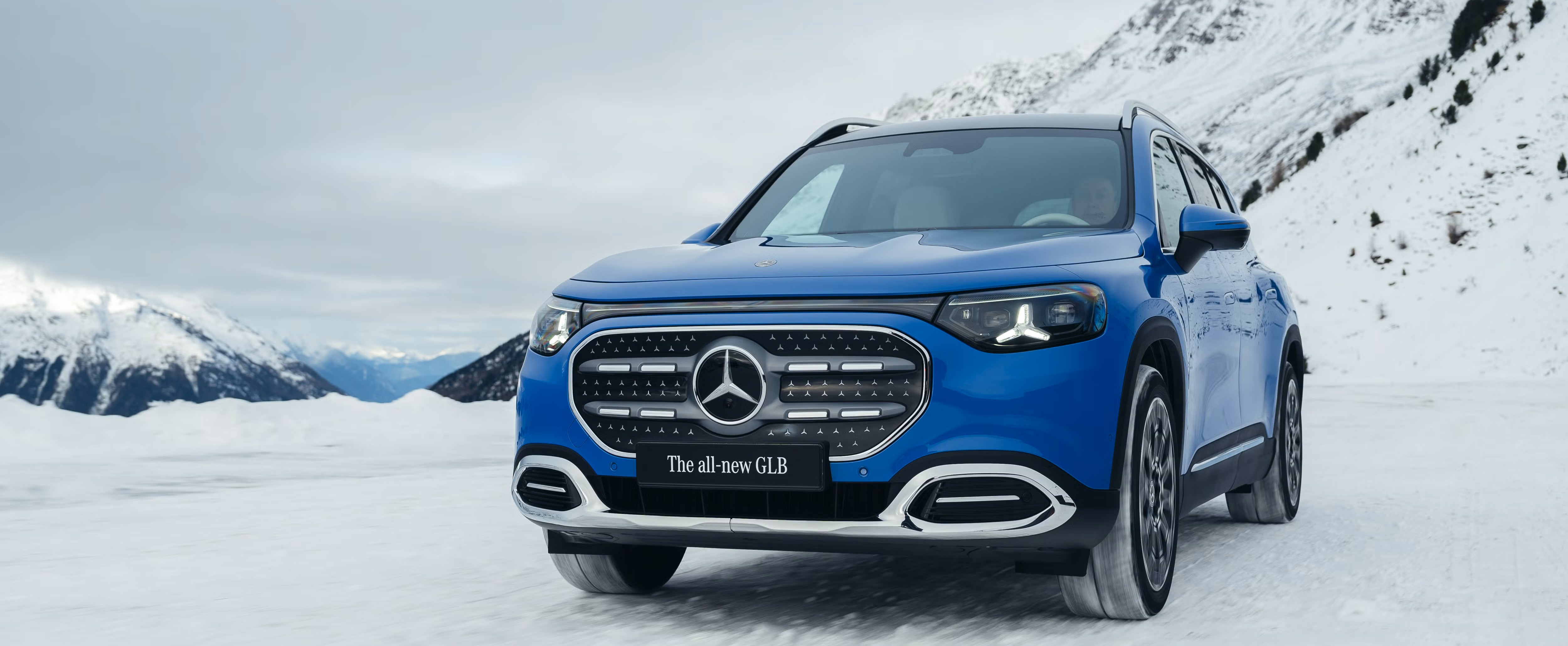
Mercedes-Benz GLB EV X244: Comprehensive Review – can it tow? Need a GLB EV towbar?
The new Mercedes-Benz GLB with EQ Technology is a substantial evolution of the brand's compact family SUV, combining a practical, upright body with a next-generation electric platform, high-speed charging and optional seven-seat accommodation. The X244 designation identifies the new generation, which replaces the electric EQB concept with a more advanced approach to electric mobility and family transport.
The GLB occupies an interesting position in the premium SUV market. It is intended to provide more passenger flexibility than a conventional five-seat crossover, without the size and expense of a full-size luxury SUV. Its electric powertrain also brings smooth acceleration, reduced local emissions and the potential for lower running costs, while its modern electrical architecture is designed to make longer journeys more convenient.
Independent road tests have highlighted the new GLB's improved versatility, comfortable driving character and substantial technological advances, although the cost of higher specifications and some of the digital features remain considerations for prospective buyers.
Exterior design and proportions
The X244 retains the recognisable upright silhouette that has always distinguished the GLB from more conventionally styled compact SUVs. Rather than adopting a sharply sloping roofline, the new model prioritises headroom, passenger access and a useful luggage compartment.
The front end introduces a more distinctive interpretation of Mercedes-Benz's electric design language. The grille treatment, lighting signatures and sculpted bodywork create a contemporary appearance while preserving the robust proportions expected of a family-oriented SUV.
The side profile is particularly important to the vehicle's purpose. Large doors, a relatively long wheelbase and an upright roofline help accommodate passengers across both rows and provide the structural proportions needed for optional third-row seating.
At the rear, the broad tailgate and squared-off bodywork reinforce the GLB's practical character. The design is less concerned with creating a coupe-like silhouette than with making the vehicle useful for everyday family transport.
The exterior dimensions are approximately 4.73 metres in length, 1.86 metres in width excluding mirrors and 1.69 metres in height, with a wheelbase of approximately 2.89 metres. These proportions place the GLB between a conventional compact SUV and a larger family-oriented vehicle.
The result is a vehicle that looks substantial without being excessively large. Its upright design is not merely a styling choice; it supports the passenger accommodation and flexibility that define the GLB.
Interior design and cabin ambience
The interior represents a major technological step forward. Depending on specification, the X244 can be equipped with the MBUX Superscreen, an integrated display arrangement that extends the digital experience across the dashboard.
The cabin combines contemporary materials, ambient lighting, digital instrumentation and connected services. Its visual emphasis is on technology and personalisation, with the infotainment system acting as the central interface for navigation, media, vehicle settings and selected comfort functions.
The newer MB.OS operating system provides the foundation for this digital environment. Its purpose is to integrate the vehicle's functions more closely, including navigation, connected services and electric-vehicle energy management.
This approach has clear advantages. The interface can accommodate a broad range of functions, present information in a consistent format and provide a more integrated relationship between navigation and charging.
However, the screen-heavy design also introduces a potential weakness. A sophisticated interface is not necessarily the easiest interface to use while driving. Drivers who prefer dedicated physical controls may find frequently accessed settings less intuitive when they are integrated into touchscreen menus.
Material quality is another important aspect of the cabin. The GLB is positioned as a premium family SUV, so the consistency of the dashboard finishes, upholstery, door panels and centre-console materials is central to its appeal.
The interior's overall character is modern and technology-focused, but its success depends on balancing digital sophistication with everyday usability. The best experience will come from a specification in which the seating, storage, controls and materials work together rather than allowing the screens to dominate the cabin.
Passenger space and seating flexibility
Passenger accommodation is one of the GLB's defining strengths. The model offers a conventional five-seat arrangement, with an optional third row available to increase capacity to seven occupants, depending on the market and configuration.
The upright roofline and relatively long wheelbase provide a useful foundation for cabin space. The second row is designed for regular family use, while the third row provides additional flexibility when extra passengers need to be carried.
The third row should nevertheless be assessed realistically. Its usefulness depends on passenger height, legroom, foot space and the duration of the journey. It is particularly valuable for children and occasional adult passengers, although the GLB is not equivalent to a much larger people carrier in terms of space for seven adults.
Access to the rearmost seats is also important. The larger rear doors and practical cabin layout are intended to make entry and exit easier, but families should test the process with the child seats and passengers they expect to carry regularly.
The seven-seat option gives the GLB a distinctive advantage over many electric SUVs that are designed exclusively for five occupants. It allows the vehicle to accommodate changing family requirements without requiring a substantially larger vehicle.
The principal compromise is luggage space when all seats are occupied. Buyers who regularly carry seven people should examine the remaining boot capacity and determine whether it meets their requirements for shopping, luggage and family equipment.
Luggage capacity and storage
The GLB offers approximately 540 litres of rear luggage capacity in the published five-seat configuration, increasing to around 1,715 litres when the rear seats are folded. A front luggage compartment provides an additional 127 litres in the relevant configuration.
The front compartment is particularly useful because it provides separate storage for charging cables, smaller bags and other items that do not need to occupy the main boot.
The rear luggage area benefits from the vehicle's upright shape and broad tailgate opening. This should make it practical for everyday shopping, suitcases, pushchairs and larger household items.
The folding rear seats provide additional flexibility when transporting bulky objects. However, the precise usefulness of the boot depends on its floor shape, loading height and the extent to which the folded seats create a level load area.
Families who regularly use the optional third row should treat luggage capacity as a key purchasing consideration. Seven seats provide useful flexibility, but passenger capacity and maximum luggage capacity cannot be achieved simultaneously.
Overall, the GLB's packaging is among its strongest attributes. Its storage arrangements support everyday family use rather than simply providing impressive headline figures.
Electric powertrain and model range
The electric GLB range is designed to accommodate different priorities, from everyday efficiency to long-distance travel and stronger all-wheel-drive performance. The available versions differ in battery capacity, power output, driving range and charging capability.
Published specifications for the launch range; equipment and availability vary by market.
|
Model
|
Drive
|
Power
|
Usable battery
|
Maximum WLTP range
|
|
GLB 200 electric
|
Rear-wheel drive
|
165 kW / 224 PS
|
58 kWh
|
Approximately 431 km
|
|
GLB 250 electric
|
Rear-wheel drive
|
200 kW / 272 PS
|
71 kWh
|
Approximately 527 km
|
|
GLB 250+ electric
|
Rear-wheel drive
|
200 kW / 272 PS
|
85 kWh
|
Approximately 631 km
|
|
GLB 350 4MATIC electric
|
All-wheel drive
|
260 kW / 354 PS
|
85 kWh
|
Approximately 614 km
|
These are maximum published WLTP figures for the relevant configurations, rather than guaranteed real-world distances.
GLB 200 electric
The entry-level GLB 200 produces 165 kW and 335 Nm of torque. Its rear-mounted electric motor provides smooth, immediate acceleration, with a published zero-to-100 km/h time of approximately 8.2 seconds.
This version is aimed at drivers who prioritise everyday usability over maximum range. Its smaller battery reduces the amount of energy carried, while the power output remains adequate for urban traffic, commuting and normal motorway driving.
The main compromise is its more limited range between charging stops. Drivers who routinely undertake long motorway journeys may find the larger-battery versions more convenient.
GLB 250 electric and GLB 250+
The GLB 250 and 250+ share a 200 kW electric motor and 335 Nm of torque, but their battery capacities differ. The 250 uses a 71 kWh usable battery, while the 250+ has an 85 kWh battery.
Both produce 272 PS and offer a published zero-to-100 km/h acceleration time of approximately 7.4 seconds. Their rear-wheel-drive layout is well suited to ordinary road use, avoiding the additional motor and complexity of the all-wheel-drive model.
The GLB 250+ is the most convincing choice for drivers who regularly travel longer distances. Its larger battery delivers the longest published range in the electric GLB line-up, while its performance remains more than sufficient for a family SUV.
The standard GLB 250 may represent a useful middle ground for buyers who want stronger performance than the entry-level version but do not need the maximum available battery capacity.
GLB 350 4MATIC electric
The GLB 350 4MATIC combines front and rear electric motors to produce 260 kW, equivalent to 354 PS, and 515 Nm of torque.
Its published zero-to-100 km/h acceleration time of approximately 5.5 seconds gives it a noticeably more performance-oriented character. The additional front motor also provides all-wheel drive, which can improve traction when accelerating on wet or slippery surfaces.
The trade-off is a modest reduction in certified range compared with the GLB 250+. The extra motor also adds mechanical complexity and weight.
For buyers who value stronger acceleration, additional traction or greater towing capability, the 350 4MATIC is the most versatile powertrain in the range.
Driving dynamics and ride comfort
The GLB is designed primarily as a comfortable family SUV rather than a sports vehicle. Its driving character is centred on stability, refinement and predictable responses, with electric performance available when required.
The low-mounted battery helps lower the centre of gravity, while the electric motors provide smooth acceleration without the interruptions associated with conventional gear changes. In normal driving, the GLB should feel composed and easy to control.
Independent road tests have praised the new model's comfortable ride and improved overall versatility. Nevertheless, the precise driving experience depends on wheel size, tyres, suspension specification and vehicle load.
The standard suspension uses conventional steel springs, while adaptive dampers are available on certain higher specifications. This distinction matters because a large, heavy electric SUV must balance body control against the need to absorb uneven road surfaces.
Smaller wheels and a comfort-oriented suspension setup are likely to provide the most forgiving ride over potholes and broken tarmac. Larger wheels may improve the vehicle's visual presence and steering response but can transmit more sharp impacts into the cabin.
The rear-wheel-drive versions should provide predictable handling for most everyday conditions. The GLB 350 4MATIC adds traction on slippery surfaces, although its additional performance does not automatically make it more comfortable or more economical.
The overall driving character is best described as refined and family-focused. The GLB is intended to reduce the effort of everyday travel rather than encourage aggressive driving.
Range and real-world efficiency
The GLB's published range is competitive, particularly in the 250+ version. Its maximum WLTP figure of approximately 631 km provides a useful benchmark for comparing it with other electric SUVs.
Real-world range depends on driving speed, ambient temperature, road conditions, wheel specification and passenger load. The distinction between urban driving and sustained motorway travel is particularly important.
At lower speeds, the vehicle can benefit from reduced aerodynamic resistance and regenerative braking. On motorways, aerodynamic drag increases significantly, so sustained high-speed driving typically produces greater energy consumption.
Cold weather can reduce range through battery-conditioning requirements, cabin heating and less favourable battery operating temperatures. Rain, headwinds, winter tyres and a heavily loaded cabin can further increase consumption.
For the GLB 250+, the following figures provide broad illustrative planning estimates rather than independently verified test results:
|
Driving conditions
|
Indicative range
|
|
Urban and suburban driving in mild weather
|
500–650 km
|
|
Mixed driving
|
430–550 km
|
|
Motorway driving at moderate speeds
|
350–450 km
|
|
Sustained motorway driving at higher speeds
|
300–400 km
|
|
Cold-weather motorway driving
|
Potentially 250–350 km
|
These estimates are deliberately broad. Actual range may fall outside them depending on conditions, and the maximum WLTP figure should not be used as a guaranteed distance between charging stops.
The larger battery is especially valuable for frequent intercity travel. It gives the driver greater flexibility when choosing charging stops and reduces the need to recharge as frequently as with the smaller-battery GLB 200.
The GLB's efficiency proposition is therefore strongest when the vehicle is matched to its owner's driving pattern. Drivers with predictable daily journeys may find the smaller battery sufficient, while frequent long-distance travellers are likely to benefit from the 250+.
Charging technology and long-distance travel
The X244 uses an 800-volt electrical architecture, a major technical advantage over electric vehicles designed around lower-voltage systems. It supports high DC charging power and is intended to reduce charging time during long journeys.
Maximum DC charging power varies by battery configuration:
|
Model
|
Maximum DC charging power
|
Published DC charging time, 10–80%
|
|
GLB 200 electric
|
200 kW
|
Approximately 20 minutes
|
|
GLB 250 electric
|
250 kW
|
Approximately 20 minutes
|
|
GLB 250+ electric
|
320 kW
|
Approximately 22 minutes
|
|
GLB 350 4MATIC electric
|
320 kW
|
Approximately 22 minutes
|
These figures are manufacturer specifications under suitable conditions. Actual charging times depend on battery temperature, the charger's capabilities, the starting state of charge and the charging curve.
The 800-volt system allows the larger-battery versions to accept very high charging power at compatible stations. This can be particularly useful on long motorway journeys, where a short charging stop can add a substantial amount of energy.
However, peak charging power is not maintained throughout the session. The rate generally falls as the battery approaches a higher state of charge, so the headline figure should not be interpreted as a constant charging rate.
Compatibility with charging infrastructure is another important consideration. The GLB's native 800-volt system may require an appropriate converter to charge from certain 400-volt DC stations. Mercedes-Benz lists compatible charging equipment and configurations, but availability and performance should be checked for the specific vehicle.
Home charging remains the most convenient solution for daily use. An AC wallbox allows the vehicle to recharge while parked overnight, while optional higher-power AC equipment can shorten charging time where supported by the electrical installation.
The charging system is one of the GLB's strongest technical features. Its full benefit, however, depends on the availability of suitable charging stations and the ease of using them during longer journeys.
Towing capability and practical utility
The electric GLB is more capable as a towing vehicle than its family-oriented positioning might initially suggest, although towing limits vary significantly by powertrain.
The GLB 200, GLB 250 and GLB 250+ have a published maximum braked trailer capacity of 1,500 kg, while the GLB 350 4MATIC is rated to tow up to 2,000 kg. The maximum unbraked trailer mass is listed as 750 kg across the range.
The GLB 350 4MATIC is therefore the most suitable version for buyers who regularly tow a substantial caravan, boat or utility trailer. Its higher torque output and all-wheel-drive system provide useful advantages when pulling away on inclines or travelling on slippery surfaces.
Towing will, however, increase energy consumption substantially. A tall caravan creates considerable aerodynamic drag, particularly at motorway speeds, and reduces the distance available between charging stops. Routes should be planned around realistic energy consumption rather than the vehicle's maximum published range.
Charging infrastructure introduces an additional complication. A vehicle and trailer combination may not fit into conventional charging bays, potentially requiring the driver to unhitch the trailer before charging.
The approved trailer mass is only one part of the calculation. The vehicle's payload, axle limits, permitted combined mass and towball load must also be respected. The exact towbar specifications and permissible nose weight should be confirmed for the individual vehicle.
The GLB is consequently a credible option for occasional and moderate towing, with the 350 4MATIC offering the greatest capability. For frequent long-distance caravan travel, practical charging arrangements will be just as important as towing capacity.
Technology and infotainment
The GLB introduces Mercedes-Benz's MB.OS operating system and a more integrated digital environment. The system is designed to connect navigation, entertainment, vehicle settings and connected services within a common interface.
The optional MBUX Superscreen is the most visually distinctive feature. It extends the display experience across the dashboard, creating a more immersive digital environment for the driver and front passenger.
The system's potential advantages include improved personalisation, integrated navigation and more sophisticated energy-management functions. Navigation can support electric journeys by accounting for charging stops and estimated energy requirements.
The main concern is the balance between functionality and distraction. A large display can make information easier to present, but touchscreen menus may require more attention than conventional controls.
Voice control and steering-wheel controls can help reduce this problem, provided that they work reliably and allow common functions to be accessed without unnecessary complexity.
The optional panoramic SKY CONTROL roof is another notable feature. Its segmented glass technology can vary light transmission across sections of the roof, providing an alternative to a conventional panoramic glass roof.
Overall, the GLB's technology is ambitious and modern. Its long-term value will depend on software reliability, interface usability and how effectively the systems simplify everyday driving.
Safety and driver assistance
The GLB's modern electrical platform provides the foundation for a comprehensive suite of driver-assistance systems. Depending on specification, available features can support adaptive cruising, lane guidance, parking and collision avoidance.
These systems can be particularly useful in a family SUV that spends considerable time on motorways or in congested urban environments.
Parking assistance and surround-view camera systems can also help when manoeuvring the vehicle in confined spaces. This is valuable given the GLB's relatively substantial width and the visibility limitations inherent in an upright SUV.
The effectiveness of these systems depends on road conditions, weather, visibility and the exact equipment fitted to the vehicle. Assistance features should not be regarded as a substitute for attentive driving.
Families should also examine child-seat compatibility and the suitability of the optional third row for their intended passengers. The latest independent crash-test assessment should be checked once a rating for the precise model and specification is available.
The GLB's safety proposition is promising, but its real-world value depends on the performance of its protection systems and the ease with which drivers can use its assistance technology.
Reliability and long-term ownership
The X244 introduces a new electric platform and a substantially revised electronic architecture. These changes offer clear technical advantages, but they also mean that long-term reliability cannot yet be assessed with the confidence available for older, established models.
This is not evidence that the GLB is unreliable. Rather, its long-term record remains limited, particularly regarding battery ageing, software stability and the durability of newly introduced electronic systems.
The main areas to monitor during ownership include the responsiveness of the infotainment system, the consistency of charging performance and the reliability of connected services.
Battery health will depend on mileage, temperature, charging behaviour and the effectiveness of the thermal-management system. The high-voltage battery warranty and the conditions under which it applies should be reviewed carefully before purchase.
The vehicle's service requirements should be simpler in some respects than those of a combustion-engine SUV because it does not require conventional engine oil changes or exhaust-system maintenance. Nevertheless, tyres, brakes, suspension, cabin filters and other components still require routine attention.
Software updates and dealer support are especially important for a vehicle with extensive digital integration. A strong service network can make a significant difference when diagnosing electronic faults or charging issues.
The GLB's technical foundations appear promising, but its long-term reliability and ownership costs will become clearer only as more vehicles accumulate substantial real-world mileage.
Ownership costs and value
The GLB's value proposition depends on its purchase price, equipment, electricity costs, insurance and depreciation.
The smaller-battery GLB 200 is designed to provide a more accessible entry into the range. The 250+ commands a stronger case for long-distance use because of its larger battery, while the 350 4MATIC adds performance and towing capability.
Charging costs depend heavily on where the vehicle is charged. Home electricity can make daily driving relatively inexpensive, while frequent use of public rapid chargers can reduce the financial advantage over a comparable combustion-engine vehicle.
Maintenance costs may also differ from those of a petrol or diesel SUV. The absence of conventional engine and exhaust servicing reduces some routine requirements, although the vehicle's tyres, suspension, brakes and electronic systems still incur costs.
Depreciation remains an important uncertainty. Electric-vehicle technology is developing rapidly, and future resale values will depend on battery condition, charging capability, warranty coverage, competing models and used-car demand.
The GLB is most compelling for owners who make regular use of its passenger flexibility, electric range and rapid charging. Buyers who mainly travel short distances and rarely need additional seating may find a less expensive electric vehicle more economical overall.
Main strengths and weaknesses
The GLB X244 has several important strengths:
- Practical design: An upright body, useful luggage capacity and optional seven-seat accommodation.
- Broad powertrain choice: Versions that prioritise efficiency, long-distance range or all-wheel-drive performance.
- Advanced charging: An 800-volt architecture and high peak DC charging power on the larger-battery models.
- Family-oriented cabin: Flexible seating, useful storage and a modern digital environment.
- Towing versatility: Up to 2,000 kg of braked towing capacity in the GLB 350 4MATIC.
Its principal compromises are equally important:
- The third row is less suitable for sustained adult use than the seating in a larger vehicle.
- The extensive touchscreen interface may not appeal to drivers who prefer physical controls.
- The largest advertised range figures are not representative of every driving condition.
- Compatibility with certain charging stations may require additional equipment.
- Long-term reliability and depreciation remain uncertain for this new generation.
- Higher specifications can make the purchase price substantial.
Overall verdict
The Mercedes-Benz GLB EV X244 is a thoughtfully developed electric family SUV that combines practical proportions with modern powertrain technology, rapid charging and optional seven-seat accommodation.
Its greatest strength is versatility. It offers more passenger flexibility than many electric crossovers while retaining dimensions that remain manageable for everyday use. Its larger-battery versions also make it suitable for regular intercity travel, and the high-voltage charging system is a significant advantage when compatible rapid chargers are available.
The GLB 250+ is the most balanced choice for drivers who prioritise range and everyday efficiency. The GLB 350 4MATIC is better suited to those who want stronger acceleration, additional traction and greater towing capacity. The GLB 200 is a sensible alternative for drivers with predictable daily journeys and convenient charging access.
The principal reservations concern the screen-heavy interface, the limitations of the third row and the lack of a mature long-term reliability record. These are not necessarily reasons to reject the vehicle, but they deserve consideration alongside its impressive specifications.
Compared with the BMW iX3 NA5, the GLB's distinctive advantage is its emphasis on passenger flexibility and family utility. The BMW is a compelling alternative for buyers who place greater emphasis on driving dynamics and long-distance electric performance, while the Mercedes-Benz offers a more adaptable seating arrangement.
The GLB X244 is best understood as a premium electric family SUV rather than a performance vehicle or a dedicated long-distance tourer. Its combination of flexible accommodation, competitive range and rapid charging makes it a strong proposition for households seeking one vehicle capable of handling commuting, family transport and longer journeys.
Its ultimate appeal will depend on the price of the chosen specification, the usability of its digital systems and how well its real-world range matches the owner's driving requirements. For buyers who genuinely need the space and flexibility it provides, the new electric GLB represents a substantial step forward from the previous EQB generation.
Increase the functionality of your new GLB EV and fit one of our X244 GLB II towbars. Pre-order today – next batch available at the end of November 2026.


 The tow bar becomes completely invisible - the lines of your car are not spoiled in the slightest.

 Select your Vehicle


