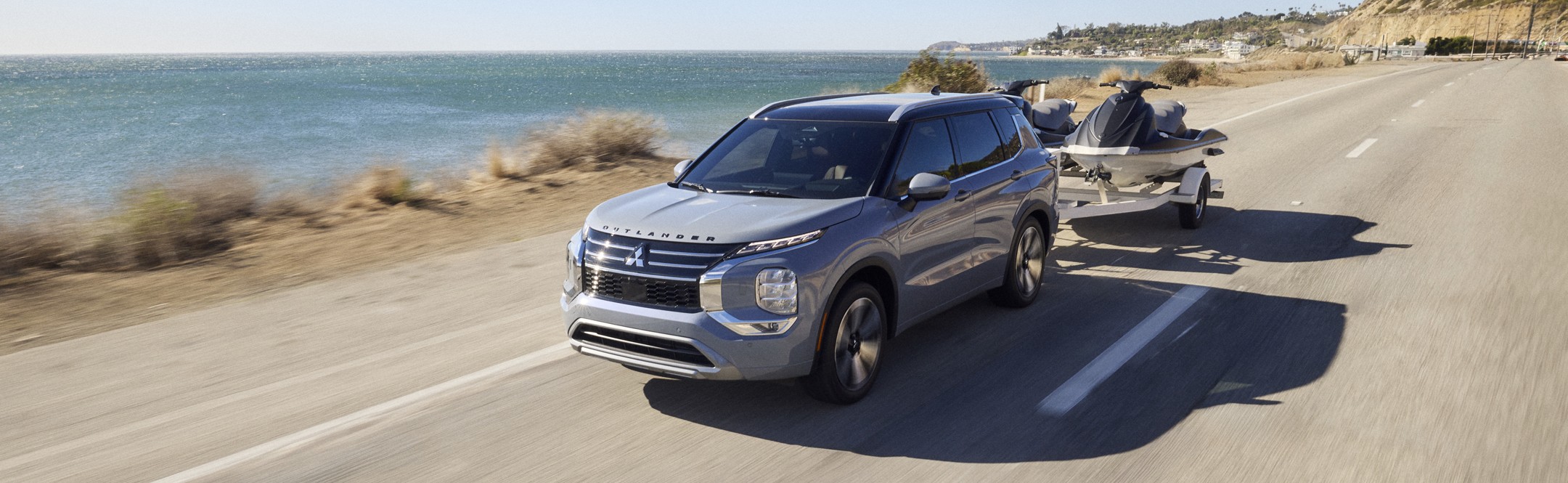
Review of the 4th-Generation Mitsubishi Outlander PHEV. Its actually a competent towing vehicle.
The 4th-generation Mitsubishi Outlander PHEV marked a major turning point not only for Mitsubishi, but for the Outlander nameplate itself. Previous generations often felt functional rather than desirable, appealing mostly to practical buyers looking for value and efficiency. This generation changed that perception dramatically. The redesign introduced a far more refined platform, a significantly improved plug-in hybrid system, a much more upscale interior, and a level of overall polish that surprised even long-time critics of the brand.
Built on the Renault–Nissan–Mitsubishi Alliance architecture shared partly with the Nissan Rogue, the Outlander PHEV finally began to feel competitive with mainstream rivals from Toyota, Hyundai, and Kia. What makes it especially interesting is that Mitsubishi did not try to turn it into a sporty crossover or a luxury SUV imitation. Instead, the company focused on making it exceptionally usable in everyday life. The result is a vehicle that excels in calm, realistic family driving rather than flashy showroom impressions.
The heart of the Outlander PHEV is its dual-motor plug-in hybrid drivetrain. A 2.4-litre petrol engine works together with front and rear electric motors, creating an all-wheel-drive system that behaves differently from many conventional hybrids. Around town, the vehicle often feels closer to a fully electric SUV than a typical hybrid. The electric motors provide immediate torque delivery, so the vehicle moves away from traffic lights with a smoothness and silence that gives it a distinctly premium character at low speeds. In urban driving, especially in traffic, the cabin remains impressively quiet and relaxed.
The overall driving experience is defined more by refinement than excitement. The steering is light and predictable, the suspension tuning prioritises comfort, and the body movements are controlled without trying to feel sporty. There is a noticeable sense of weight during aggressive cornering, but that is not really the point of the vehicle. The Outlander PHEV is designed for long commutes, school runs, winter weather, and comfortable daily use rather than enthusiastic driving. In that role, it performs very well.
One of the strongest aspects of the 4th-generation Outlander PHEV is the way it handles electrified commuting. With an electric driving range of approximately 61 kilometres under EPA testing, many owners can complete most weekday journeys without using petrol at all. In urban environments, the real-world electric range can sometimes exceed official estimates, particularly in mild weather and moderate traffic conditions. Drivers who can charge at home overnight often find themselves visiting fuel stations very infrequently.
However, the system is not perfect. One criticism frequently raised by owners is that the petrol engine can activate unexpectedly. Using the climate control system during cold weather, accelerating aggressively, or travelling at sustained motorway speeds may cause the engine to start even when there appears to be enough battery charge remaining. For drivers expecting strict EV-only operation, this behaviour can sometimes feel frustrating. Mitsubishi prioritised efficiency management and drivetrain protection over creating a pure electric experience, and that engineering philosophy is noticeable in daily use.
Where the Outlander PHEV truly distinguished itself from previous Mitsubishis was in interior quality. Earlier Outlanders often felt utilitarian, with hard plastics and uninspiring layouts, but the 4th generation introduced a cabin that looked and felt substantially more premium. The dashboard design is modern and clean, the seating position is excellent, visibility is very good, and the level of sound insulation is impressive for the segment. In higher trims especially, the interior ambience approaches near-premium territory at first glance.
There are still reminders that this is not a luxury SUV. Some lower cabin materials remain hard to the touch, glossy piano-black surfaces scratch easily, and certain switches lack the solid feel found in more expensive rivals. Nevertheless, the improvement compared to previous generations is dramatic. The cabin no longer feels like an economy-focused compromise. Instead, it feels carefully designed around comfort and practicality.
The front seats are especially comfortable during long journeys, and the second row offers generous space for adults. The optional third row, however, is best viewed as an occasional-use feature. While technically increasing practicality for families, the rear-most seats are cramped for adults and significantly reduce luggage capacity when deployed. Most owners treat the vehicle as a spacious five-seater with emergency seating capability rather than a true seven-seat SUV.
One area where Mitsubishi has maintained a strong reputation is all-wheel-drive performance. The Super All-Wheel Control system, known as S-AWC, gives the Outlander PHEV excellent traction and stability in poor weather conditions. Snow, heavy rain, icy roads, and slippery surfaces are handled with a level of confidence that consistently earns praise from owners in colder climates. The vehicle feels secure and predictable even in difficult conditions, which adds greatly to its appeal as a family SUV.
Ride comfort is another major strength. At lower speeds the suspension absorbs rough surfaces smoothly, and even on motorways the cabin remains relatively refined. Wind and road noise are controlled effectively, especially during electric operation. Under hard acceleration, the petrol engine can become louder and somewhat strained, but during relaxed driving the overall refinement level is surprisingly mature.
Technology is one area where the Outlander PHEV still trails some competitors. The infotainment system looks modern enough, and smartphone connectivity is available, but software polish is inconsistent. Owners have reported occasional glitches involving Apple CarPlay, infotainment freezes, and electronic warning messages. These problems are usually more irritating than serious, but they reinforce the feeling that Mitsubishi’s software integration still lacks the sophistication of Korean or Japanese rivals such as Hyundai, Kia, or Toyota.
Charging practicality remains one of the vehicle’s most interesting characteristics. Unlike many plug-in hybrids, the Outlander PHEV supports DC fast charging through the CHAdeMO standard in some markets. While CHAdeMO infrastructure is gradually declining in certain regions, the ability to rapidly recharge a plug-in hybrid remains unusual and useful. Overnight home charging with a Level 2 charger is generally sufficient for daily use, allowing owners to maximise electric driving without much inconvenience.
Practicality extends beyond the drivetrain. The cargo area is generous when the third row is folded, and some versions include household power outlets capable of running appliances or camping equipment. This gives the Outlander PHEV a slightly adventurous character that appeals to buyers interested in outdoor activities or emergency backup power capability.
Reliability and ownership experience present a more mixed picture. Mitsubishi’s warranty coverage is one of the strongest advantages of the vehicle, helping offset concerns about the brand’s smaller dealer network. Mechanically, the core hybrid system appears reasonably durable so far, but various owners have reported software bugs, minor electronic faults, sensor issues, and occasional trim-quality complaints. These issues are generally not catastrophic, but they do affect the overall ownership experience.
Ultimately, the 4th-generation Outlander PHEV succeeds because it understands its purpose clearly. It is not trying to be the fastest SUV in the segment, nor the most luxurious or technologically advanced. Instead, it focuses on making daily life easier. For drivers who want electric commuting during the week, long-distance flexibility on weekends, confidence during winter weather, and comfortable family practicality without committing fully to a battery-electric vehicle, the Outlander PHEV makes an exceptionally convincing argument.
Its greatest achievement is not that it dominates any single category, but that it balances so many priorities successfully. The 4th-generation Outlander PHEV feels thoughtfully engineered around real-world family use, and that makes it one of the most practical and surprisingly capable plug-in hybrid SUVs of its era.
Towing is one of the most underrated strengths of the 4th-generation Mitsubishi Outlander PHEV, particularly in European and Australian markets where Mitsubishi positioned the vehicle as a practical touring and caravan-capable SUV rather than simply an urban hybrid.
What makes the Outlander PHEV interesting as a tow vehicle is the way its electrified drivetrain changes the towing experience. Unlike a conventional petrol SUV that needs revs and gearbox movement to build momentum, the Outlander delivers immediate electric torque from both front and rear motors. Pulling away with a caravan, trailer, or boat feels smooth and controlled, especially at low speeds. There is no sudden surge or hesitation; instead, the vehicle moves off with a calm, effortless character that suits towing extremely well.
In most European and Australian specifications, the vehicle is rated to tow approximately 1,600 kg (check your owners manual) with a braked trailer and around 750 kg unbraked. Those figures place it in a surprisingly competitive position among midsize plug-in hybrid SUVs.
One of the biggest advantages during towing is stability. Because the battery pack is mounted low beneath the floor, the Outlander PHEV has a lower centre of gravity than many traditional SUVs. This gives the vehicle a planted and reassuring feel when towing at higher speeds or dealing with crosswinds. Owners frequently describe the car as stable and predictable on motorways, especially with medium-sized caravans and camping trailers attached.
The Super All-Wheel Control system, Mitsubishi’s S-AWC setup, also contributes significantly to towing confidence. The electric rear motor reacts extremely quickly to changes in traction, which becomes very noticeable on wet roads, muddy campsites, gravel tracks, snowy conditions, or slippery boat ramps. In poor weather, the vehicle feels secure in a way many front-wheel-drive-based crossovers do not.
This combination of electric torque, low-centre-of-gravity stability, and strong traction is one reason the Outlander PHEV became unexpectedly popular among caravan owners in parts of Europe and Australia. Mitsubishi itself promoted the vehicle heavily for towing use after receiving positive attention in caravan and towing communities.
Another characteristic that suits towing well is regenerative braking. When descending hills with a trailer attached, the driver can use the steering-wheel paddles to increase regeneration levels, allowing the vehicle to slow itself progressively while recovering energy back into the battery. This reduces reliance on conventional brakes and helps the SUV feel more composed during long downhill sections. For caravan drivers travelling through mountainous areas, this feature can make towing noticeably less stressful.
In everyday towing situations, the Outlander PHEV handles moderate loads very confidently. Small to medium caravans, utility trailers, motorcycles, jet skis, bicycles, and lightweight boats are all well within its comfort zone. Around town and on secondary roads, the electric assistance makes towing feel smoother and more refined than many diesel SUVs.
However, the vehicle does have limitations once towing demands become more extreme. When battery charge drops during sustained motorway driving or long uphill climbs, the petrol engine must work much harder to maintain speed and recharge the battery simultaneously. Under heavy load, the engine can sound strained and noticeably louder because the system is engineered primarily around efficiency rather than heavy-duty towing performance.
Aerodynamic drag also affects efficiency significantly. Owners commonly report that towing a caravan or large trailer reduces electric-only driving range dramatically, especially at motorway speeds. Once towing, the vehicle behaves far more like a conventional hybrid than an EV-focused SUV. Strong headwinds, steep terrain, and higher speeds amplify this effect further.
Thermal load is another consideration during long-distance towing in hot climates or mountainous regions. While the drivetrain is generally robust within its rated limits, the Outlander PHEV remains a midsize crossover rather than a dedicated heavy-duty tow vehicle. It feels most comfortable towing moderate recreational loads rather than operating continuously near maximum capacity.
Compared with rivals, the Outlander PHEV occupies a unique position. Few plug-in hybrid SUVs combine genuine electric commuting capability, strong all-wheel-drive performance, family practicality, and competent towing behaviour as effectively. Some competitors may offer more outright towing power or greater refinement under heavy loads, but the Mitsubishi’s balance of efficiency and usability gives it a very distinctive appeal.
Ultimately, the 4th-generation Outlander PHEV works best as a lifestyle-oriented tow vehicle. It is ideal for owners who spend most of the week commuting electrically but still want the ability to tow a caravan, camper, or recreational trailer on weekends and holidays. Its greatest strength is not brute towing force, but the calmness and confidence with which it handles real-world towing situations.
Order your European style Outlander towbar today………..


 The tow bar becomes completely invisible - the lines of your car are not spoiled in the slightest.

 Select your Vehicle


